bestcouponblogs may earn a commission when you buy through links on this page, at no extra cost to you. This does not affect our ratings.
Assessing external reception solutions involves weighing the relief of never missing a prospect against the effort needed to align third-party agents with internal expectations. A detailed review of answering service care pros and cons helps founders, medical coordinators, and tradespeople decide whether outsourcing phone coverage creates an efficient communication channel or introduces unnecessary overhead.
Quick verdict: Answering Service Care earns a score of 7.6/10. It works best for local enterprises, medical clinics, and independent specialists needing 24/7 call reception and structured message delivery. It is less suitable for businesses requiring deep technical troubleshooting during inbound telephone consultations.
| Evaluation Metric | Assessment Details |
|---|---|
| Overall Rating | 7.6/10 |
| Target Audience | Businesses seeking continuous reception coverage and appointment handling |
| Poor Fit For | Organizations needing detailed tech support or complex software work on calls |
| Standout Strengths | Continuous live answering, rapid message relay, and calendar management |
| Pre-Purchase Advisory | Check overage thresholds, billing increments, and onboarding terms on the official site |
1. Evaluation Methodology for Telephone Reception Platforms
Our review process assesses functionality, daily usability, plan value, integration capabilities, audience alignment, customer service, and market standing. Because subscription limits, features, and rates change periodically, buyers should always verify billing models directly with the vendor. This analysis was generated with AI assistance and subsequently refined by the editorial staff.
2. Essential Overview: What to Expect from Outsourced Answering
Third-party call services operate as off-site front desks that take calls, record notes, forward urgent inquiries, and coordinate appointments. For teams navigating the Collaboration & Productivity category, delegating inbound telephone queues prevents everyday interruptions while giving callers a live human contact.
While business owners appreciate seamless message delivery during peak operational hours, outside agents inherently depend on structured scripts rather than deep institutional expertise. Establishing strict call boundaries and confirming all terms on the provider's website helps prevent communication misalignments.
3. Key Operational Advantages
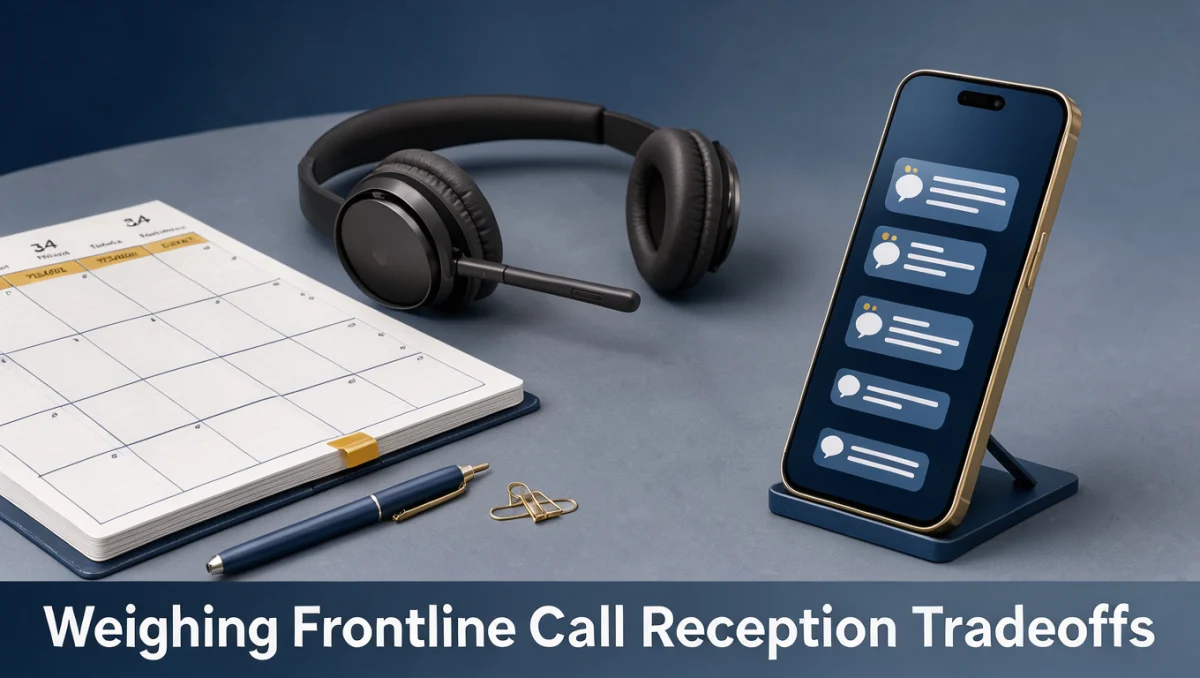
Adopting an outsourced telephone desk introduces tangible benefits for busy offices and fieldwork businesses aiming to remain reachable.
3.1. Reliable 24/7 Coverage Without Payroll Commitments
Maintaining in-house receptionists entails significant payroll taxes, benefits, equipment investments, and holiday scheduling challenges. Outsourcing call coverage provides constant voice reception across regular business hours, weekends, and holidays without full-time hires. Callers reach live agents who note inquiries, establishing a steady communication bridge for field contractors, clinics, and solo practitioners.
3.2. Uniform Message Logging and Fast Notifications
Internal staff rushing between assignments often capture incomplete notes, resulting in lost leads and sluggish response times. External call operators follow standardized intake frameworks, recording caller identities, phone numbers, and inquiry summaries. These records are quickly dispatched via text message or email, empowering teams to organize their callbacks based on clear priorities.
3.3. Calendar Booking Assistance
Firms lose valuable revenue when prospective clients encounter an answering machine. Live operators can book appointments directly into digital calendars by following predetermined scheduling rules. This seamless intake reduces administrative friction for consulting firms, repair technicians, and outpatient healthcare offices.
3.4. Structured Routing for High-Priority Inquiries
Not every caller can wait for a standard message review. Answering services allow businesses to define clear transfer protocols that immediately route critical emergencies to on-call team members while routing everyday requests into standard message queues. This division saves leadership from filtering every ringing line manually.
4. Trade-Offs and Potential Limitations
Despite offering reliable voice availability, shared answering solutions carry specific structural boundaries that organizations must actively manage.
4.1. Strict Script Dependence Without Specialized Knowledge
External receptionists answer lines across diverse industries, meaning they cannot fully grasp subtle company traditions, nuanced pricing models, or intricate service jargon. Callers who request detailed technical guidance often hit a wall. Organizations can offset this challenge by focusing telephone scripts strictly on professional greetings, basic qualification, message taking, and emergency transfers.
4.2. Variable Monthly Costs Tied to Usage Metrics
Phone services bill based on call minutes or interaction tallies, meaning unexpected marketing surges or complex interactions can inflate your monthly invoice. Invoicing often hinges on rounding rules and hold-duration policies defined by the provider. Prospective buyers should always review the official provider website to confirm minute calculation formulas and overage rates.
4.3. Script Maintenance and Setup Oversight
Transitioning phone traffic to an external desk demands organized onboarding, including building call trees, crafting glossaries, and creating emergency contact paths. When operational procedures or staff roles shift, businesses must refresh their instruction profiles promptly to avoid misdirected inquiries. Appointing a team liaison ensures operator guides mirror actual daily routines.
5. Comparative Breakdown of Operational Factors
Examining operational pros alongside typical limitations clarifies whether third-party reception matches your current organizational setup.
| Operational Area | Primary Advantage | Inherent Tradeoff | Strategic Recommendation |
|---|---|---|---|
| Availability | Round-the-clock live phone presence | Operators lack deep operational familiarity | Keep agent tasks limited to intake and routing |
| Message Capture | Organized summaries delivered instantly | Demands internal monitoring of receipts | Build clear callback routines for team members |
| Scheduling | Routine entry into calendar systems | Inflexible for multi-layered booking logic | Maintain clear, uncomplicated scheduling logic |
| Financials | Eliminates full-time receptionist salaries | Total fees fluctuate with call duration | Review minute rounding terms on the vendor site |
| Account Setup | Standardized onboarding structure | Requires updates whenever internal policies change | Conduct quarterly audits of all greeting guides |
6. Matching Business Types to Answering Services
Identifying whether outsourced answering fits your enterprise depends on your team's mobility, inbound call volume, and inquiry complexity.
6.1. Mobile Contractors and Trade Services
Plumbing pros, HVAC specialists, and builders spend their days on active jobsites where handling phones interrupts manual tasks. An off-site service ensures potential customers hear a live voice while capturing project specs for later review, letting craftspeople focus on billable field tasks.
6.2. Healthcare and Dental Clinics
Offices managing high patient traffic face ringing phones that distract front desk personnel from in-person check-ins. External operators can manage incoming overflow, record rescheduling requests, and filter after-hours calls based on urgent care criteria.
6.3. Independent Advisors and Solo Professionals
Legal consultants, accountants, and freelance marketing experts often struggle to look established without dedicated administrative help. Utilizing outsourced live reception provides callers with a professional point of contact and keeps personal mobile voicemails private.
6.4. Workflows Better Suited for In-House Teams
Organizations needing immediate tier-two IT troubleshooting, multi-screen software account administration, or nuanced customer retention dialogues are poor candidates for shared-operator desks. Technical problem resolution demands internal representatives with native system access.
7. Common Inquiries
7.1. How are operator call minutes typically tracked?
Operators track time spent interacting with callers, and providers often round up to the nearest whole minute. Confirming whether transfer hold intervals count against your monthly allowance prevents unexpected budget surprises.
7.2. Can outside receptionists manage technical business terms?
Agents follow explicit reference guides rather than formal industry training. Supplying clear pronunciation notes, glossaries, and brief routing directives helps agents handle specialized terms accurately.
7.3. How do teams update their scripts when operations shift?
Companies should assign an internal manager to draft and submit adjustments through the provider's management console. Keeping directory rosters, holiday calendars, and urgent escalation paths up to date prevents misrouted messages.
7.4. What is the best way to forecast monthly answering costs?
Review recent call records to project monthly interaction numbers, conversation lengths, and seasonal peaks. Comparing anticipated usage with baseline allocations helps you choose an appropriate tier and avoid steep overage penalties.
8. Summary Assessment
Reviewing this call solution demonstrates a proven approach for organizations aiming to keep lines open without taking on in-house administrative staff. At Best Coupon Blogs, our assessment shows that this service delivers dependable frontline communication when goals focus on appointment intake, structured note taking, and urgent routing.
| Metric Category | Score | Evaluation Rationale |
|---|---|---|
| Features | 7.5/10 | Covers core call handling, message relays, and appointment scheduling needs. |
| Ease of Use | 8.0/10 | Clean onboarding centered on straightforward scripts and alert settings. |
| Pricing and Value | 7.2/10 | Cost-effective for basic intake; requires careful oversight of minute calculations. |
| Integrations | 7.0/10 | Handles standard notification delivery; verify direct software links on the site. |
| Audience Fit | 8.2/10 | Excellent match for appointment-driven practices, trades, and independent pros. |
| Support | 7.5/10 | Provides dedicated account guidance; confirm setup specifics with the provider. |
| Market Standing | 7.8/10 | Holds a stable presence among traditional shared-receptionist networks. |
| Final Score | 7.6/10 | Average performance across all key evaluation pillars. |
Answering Service Care offers dependable phone support for teams needing systematic message collection. If your office relies on intricate customer issue resolution, keep agent duties focused on intake rather than deep troubleshooting.