Our review is informed by research, but plans, prices, and limits change often, so please verify current details on each vendor's official website before buying. Editorial note: Best Coupon Blogs publishes this comparison to help readers evaluate contact intelligence software with clear, structured criteria.
Quick Verdict
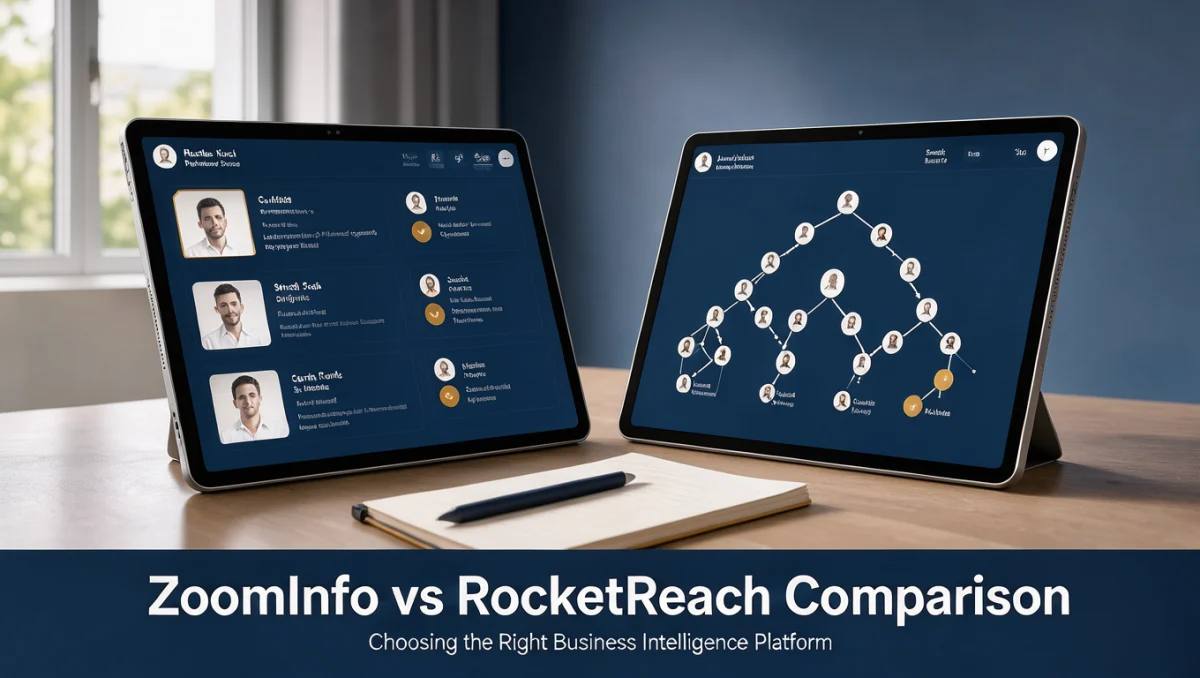
With an overall score of 7.9 out of 10, the right pick depends on how your team works. ZoomInfo suits established organizations that need deep company intelligence, reporting-line mapping, and coordinated go-to-market execution. RocketReach fits individual recruiters, small teams, and sales reps who want straightforward direct-contact discovery without heavy setup.
| Metric | Evaluation |
|---|---|
| Overall score | 7.9 / 10 |
| Best for | Revenue teams that need detailed org charts, or individual searchers who need quick contact lookups |
| Not ideal for | Organizations with unclear data governance, or teams unwilling to confirm billing terms in advance |
| Key strengths | Contact verification, account intelligence, advanced search filters, and workflow support |
| Check before buying | Contract terms, seat minimums, export limits, and integration compatibility on official vendor pages |
How We Reviewed the Two Tools
We assessed each platform against seven criteria: features, ease of use, pricing and value, integrations, audience fit, support, and competitive position. This article was drafted with AI assistance and then reviewed and edited by the Best Coupon Blogs editorial team.
Core Differences in Short
ZoomInfo works primarily as a comprehensive go-to-market data platform. It provides account-level insights, organizational charts, intent signals, and contact records meant to align sales, account management, and marketing around shared pipeline targets.
RocketReach is built mainly around individual and candidate contact lookup. It concentrates on finding direct personal or corporate email addresses and professional social profiles, giving recruiters and individual reps quick access to direct communication channels.
In practice, ZoomInfo is stronger for multi-stakeholder sales cycles, while RocketReach is stronger when reachability of a specific person matters more than mapping the company around them.
Positioning at a Glance
Matching platform strengths to your operational complexity is the key decision. Teams evaluating sales tools should decide whether they need full corporate account mapping or straightforward contact extraction.
| Tool | Best for | Core strength | Consider if |
|---|---|---|---|
| ZoomInfo | Mid-market and enterprise go-to-market teams | Account structure mapping and organizational intelligence | Your deals involve multiple stakeholders and require account-level insight |
| RocketReach | Recruiters, sourcing professionals, and individual sellers | Fast direct email and professional profile discovery | Your workflow centers on individual contact lookups rather than broad account research |
Features
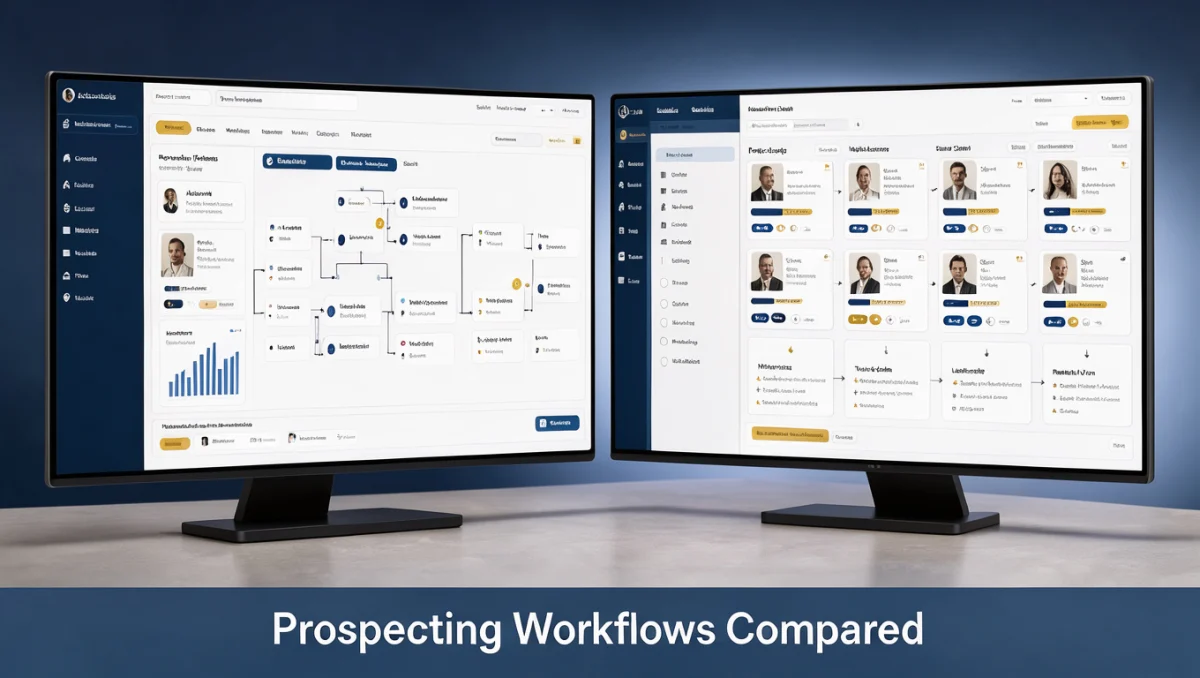
ZoomInfo organizes its features around account-based sales and marketing. Users can research company profiles, identify key decision-makers through org charts, filter prospects by department or seniority, and monitor intent signals to time outreach.
RocketReach concentrates on contact-finding accuracy. Users search a large index of professional profiles to locate verified work emails, alternative addresses, phone links, and associated social accounts.
Teams that need account-level insight and department mapping get more structure from ZoomInfo. Buyers whose main goal is finding one person's email with minimal administration will find RocketReach direct and purpose-built.
Ease of Use and Learning Curve
RocketReach offers a minimal interface centered on direct search. Users enter a name, company, or profile link and retrieve contact information with little onboarding, which suits solo users and lean recruiting teams.
ZoomInfo has a wider range of views, filters, and admin settings. Because it manages account hierarchies, intent data, and territory assignments, new users often need dedicated onboarding and admin guidance before working at full efficiency.
If you need fast adoption across distributed or non-technical staff, a simpler lookup tool usually requires less training. Complex sales teams may find the onboarding investment worthwhile for the full organizational view.
Pricing and Value

Subscription models differ considerably. Many enterprise vendors use customized annual agreements based on team size, data usage tiers, and specific functional modules.
RocketReach has traditionally offered tiered subscription packages that let individuals or small teams subscribe monthly or annually. ZoomInfo generally works on enterprise contracts structured around organization-wide deployment and data credit allowances.
Before committing, check the official pricing pages for both products to confirm current contract lengths, payment frequencies, seat requirements, and credit renewal policies.
Integrations and Workflow Fit
Customer relationship management systems and outreach platforms form the backbone of most sales stacks. A data provider should connect smoothly with your main record system to avoid manual entry errors.
Both platforms support exporting and syncing data into standard CRM systems. Enterprise tools often add two-way sync, automated enrichment, and scheduled deduplication to keep pipelines clean across large teams.
Because integration support varies by subscription tier, confirm in the official technical documentation whether your CRM or applicant tracking system connects natively or needs a custom connector.
Audience Fit
ZoomInfo aligns closely with mid-market and enterprise organizations that employ dedicated sales development representatives, account executives, and revenue operations managers. These teams need unified account visibility and detailed organizational intelligence.
RocketReach serves corporate recruiters, executive search firms, freelance talent sourcers, and independent founders. These users rarely need account hierarchy trees or revenue indicators; they want a direct way to reach a specific individual.
Before choosing, map whether your staff works accounts collaboratively or pursues prospects through independent direct outreach.
Support and Implementation
Implementation needs depend on how deep the chosen software is. Enterprise data platforms often provide dedicated account managers, technical onboarding specialists, and scheduled check-ins for larger agreements.
Self-serve platforms usually offer support through digital ticket queues, searchable knowledge bases, and community documentation. Smaller organizations often appreciate fast ticket-based resolution, while enterprise buyers typically expect direct account oversight.
Review official service terms to see available support channels, guaranteed response times, and whether implementation help carries additional professional service costs.
Competitive Landscape
The prospecting and business intelligence category includes several alternatives serving different segments, such as Apollo.io, Cognism, Lusha, and LinkedIn Sales Navigator.
ZoomInfo holds its position through deep company profiling and enterprise workflow alignment. RocketReach competes by offering simple, accessible contact lookups that need minimal setup or administration.
When comparing, decide whether your organization needs an all-in-one engagement and data platform or just an accurate contact discovery layer to supplement existing outbound systems.
How to Decide
- Define the primary goal: account-level mapping or individual contact lookups.
- Count required seats: separate people who need continuous access from those who search occasionally.
- Review your tech stack: check official integration lists to confirm the tool syncs with your records system.
- Assess training capacity: decide whether your team can handle multi-week onboarding or needs immediate self-serve use.
- Check cancellation and renewal terms: confirm notice windows and contract terms directly in the vendor agreement before signing.
Frequently Asked Questions
How should teams budget for business contact data subscriptions?
Account for seat costs, recurring data credit limits, add-on modules for advanced filters, and any implementation fees. Confirm on the official pricing pages whether unused credits roll over or expire at the end of each billing cycle.
How can I check data accuracy before buying?
Compile a representative list of existing target prospects across regions and seniority levels, then test the lookup results against that known sample to see whether direct dials and email deliverability meet your standards.
How does team size affect the choice?
Larger teams with dedicated admins usually benefit from centralized access control, pooled credits, and unified governance found in enterprise platforms. Solo users and small teams often get better value from simpler tools that do not require annual enterprise commitments.
When is account mapping more important than direct email discovery?
Account mapping matters most when selling high-consideration products that need approval from several executives. If deals close through single-point outreach or candidate sourcing, straightforward direct contact lookup is often enough.
What contract details need careful review?
Confirm the renewal process, termination notice periods, data export rights when the contract ends, and any penalties for changing user licenses mid-term. Always read the formal agreement the vendor provides.
Final Verdict
The choice between ZoomInfo and RocketReach comes down to structural scope versus tactical simplicity. ZoomInfo provides the deep corporate intelligence needed for complex, multi-stakeholder go-to-market efforts, while RocketReach offers an agile, low-overhead platform for direct prospecting and talent sourcing.
| Criterion | Score /10 | Reason |
|---|---|---|
| Features | 8.5 / 10 | Strong coverage of account mapping, intelligence, and individual contact lookup |
| Ease of Use | 8.0 / 10 | Simple search on lightweight tools, balanced against a steeper learning curve on complex platforms |
| Pricing and Value | 7.2 / 10 | Requires matching team size and credit usage to long-term subscription commitments |
| Integrations | 7.8 / 10 | Supports major CRM systems, though tier-based restrictions must be verified |
| Audience Fit | 8.2 / 10 | Clear division between enterprise revenue teams and agile recruiters or solo searchers |
| Support | 7.0 / 10 | Varies widely between self-service ticketing and managed enterprise accounts |
| Competitive Position | 8.6 / 10 | Both tools hold strong, distinct positions in the contact intelligence sector |
Overall Best Coupon Blogs score: 7.9 / 10
For enterprise revenue organizations running complex outbound campaigns across multiple territories, ZoomInfo provides the organizational visibility you need. For boutique recruiting firms, independent consultants, and nimble sales teams that want fast contact discovery without complex contract obligations, RocketReach is a sensible, focused choice.
Questions about evaluating software for your team? Reach out through the Best Coupon Blogs contact page, or follow us on LinkedIn for ongoing software evaluation guidance.
See More zoominfo vs rocketreach