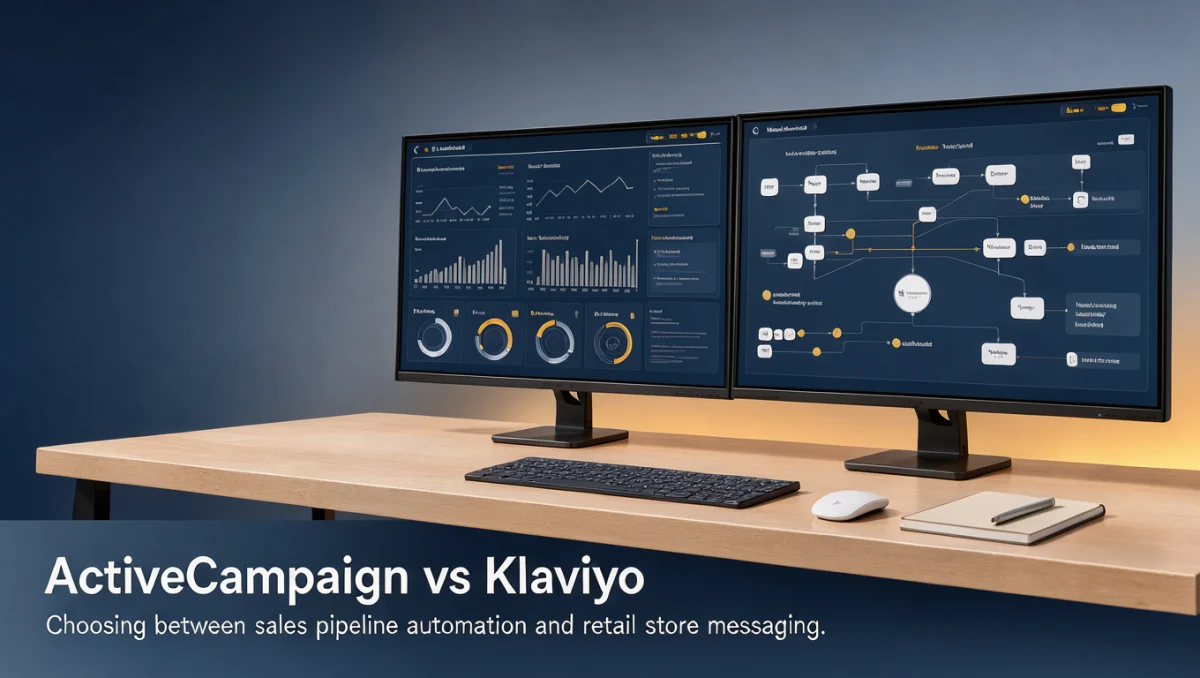
When weighing activecampaign vs klaviyo, the decision primarily hinges on your revenue model: are you cultivating client relationships through customized consultation pipelines, or are you accelerating transactional checkouts through an online storefront? The team at Best Coupon Blogs reviews enterprise software by dissecting operational architecture rather than relying on promotional claims.
While both systems hold prominent positions in modern digital Marketing environments, their internal engines address opposing operational tempos. ActiveCampaign merges an advanced conditional messaging builder with native deal pipeline tracking. In contrast, Klaviyo centers entirely on dynamic product catalogs, checkout events, and merchant data streams. Identifying which framework aligns with your daily operations ensures your tech stack remains scalable without painful data migrations later.
Summary judgment: Scoring an overall 8.0 out of 10, this platform comparison depends entirely on business identity. ActiveCampaign thrives in consulting firms, educational academies, and B2B services where human-assisted sales steps are critical. Klaviyo serves direct-to-consumer ecommerce merchants eager to trigger revenue-generating messages off browsing and purchasing actions. Neither platform is built for casual bloggers seeking a rudimentary bulk newsletter sender without automated triggers.
| Evaluation Metric | Platform Overview |
|---|---|
| Overall Rating | 8.0 / 10 |
| Optimal Audience | Agencies and consultancies tracking lead stages, or online shop owners synchronizing digital cart events. |
| Suboptimal Fit | Individual creators who merely dispatch plain broadcast emails without branching logic or purchase tracking. |
| Primary Assets | Complex visual logic trees, integrated sales pipelines, retail behavior mapping, and granular segmentation. |
| Pre-Purchase Advisory | Examine official vendor subscription pages for list size brackets, sending caps, and required feature add-ons. |
Evaluation Framework and Methodology
Our operational breakdown investigates what these two software suites achieve out of the box, their primary audiences, and how they navigate market demands. We apply seven standard benchmarks: functional depth, learning curve, pricing structures, connectivity, business fit, assistance availability, and overall market position. Software parameters, plan allowances, and subscription costs change regularly, so buyers must verify current tiers on vendor portals before subscribing.
The Core Distinction
The decisive contrast between ActiveCampaign and Klaviyo rests on how your enterprise converts attention into cash flow. ActiveCampaign delivers an adaptable workflow builder that couples multi-channel messaging with internal CRM task delegation and milestone boards. This configuration naturally accommodates agencies, subscription platforms, and consultancies where sales reps guide prospects across sequential approval stages.
Conversely, Klaviyo operates as an analytics and messaging engine dedicated to retail commerce. Its data structure ingests digital storefront interactions in real time: browsing specific product variants, dropping items into a cart, finishing transactions, or requesting returns. When recurring consumer orders and catalog merchandising drive your balance sheet, Klaviyo matches your operational needs. If closing deals requires proposals, appointments, and discovery meetings, ActiveCampaign offers the superior toolset.
Strategic Market Positioning
Software providers design their tools around specific data types. Selecting the right solution requires recognizing whether your system needs to manage complex individual prospect lifecycles or high-velocity retail transaction events.
| Platform | Target Sector | Core Architectural Strength | Best Adopted When |
|---|---|---|---|
| ActiveCampaign | Professional services, agencies, educational portals, and B2B models. | Multi-branched journey builders integrated with lead scoring and pipeline management. | Your operational flow requires discovery calls, quotes, or hands-on pipeline stages. |
| Klaviyo | Online consumer storefronts and digital product merchandisers. | Continuous synchronization of storefront metrics and purchase-specific audience segments. | Revenue depends on repeat checkouts, digital browsing sessions, and store promotions. |
Organizations must determine whether their customer interactions are fundamentally relational or purely transactional. Workflows involving account executives and custom contracts benefit immensely from integrated deal tracking. Conversely, automated campaigns responding straight to digital storefront sessions generate faster returns inside a specialized retail communication platform.
Core Features and Workflow Scope

Comparing these platforms requires exploring their visual automation canvases, audience segment logic, contact records, and dynamic content editors.
Workflow Construction and Logic Engines
ActiveCampaign relies on a comprehensive builder loaded with conditional splits, waiting intervals, webhook triggers, and automated pipeline adjustments. Campaigns can pivot not only based on email engagement or site visits, but also when a deal advances, a lead score passes a threshold, or a contact tag updates. This visual freedom enables teams to steer leads across extended, non-linear buying cycles.
Klaviyo provides pre-built automation sequences calibrated specifically for retail operations. Standard flows react instantly to storefront actions, such as abandoned checkouts, inventory restocks, or catalog browsing sessions. While merchants can establish branching logic using lifetime expenditure or historical purchase counts, the underlying goal remains stimulating retail sales rather than coordinating internal team tasks.
Audience Targeting and Data Synchronization
Segmentation within ActiveCampaign utilizes dynamic tagging, custom contact properties, site activity triggers, and interaction metrics. Marketing teams can isolate cohorts based on demographic inputs, downloaded whitepapers, or sales readiness. This makes it straightforward to configure complex B2B scoring, giving points when prospective clients consume case studies or view pricing pages.
Klaviyo builds self-refreshing dynamic segments powered by raw ecommerce data feeds and purchasing intervals. Marketers can easily group consumers who bought from a particular product line within the last quarter or who viewed items without finishing checkout. This deep catalog-level filtering frees retail teams from tedious list maintenance.
Contact Profiles and Pipeline Mechanics
ActiveCampaign features robust CRM contact records that aggregate email history, account notes, assigned team reps, and visual deal columns. This integrated setup allows service firms to advance leads from initial form fills to finalized contracts without buying separate CRM software.
Klaviyo centers its contact records around consumer expenditure analytics, predicted replenishment timeframes, shopping histories, and cross-channel messaging options. Traditional B2B pipeline stages and lead routing boards are completely absent, as direct-to-consumer businesses rarely require manual sales outreach.
Interface Navigation and Learning Curve
Operational complexity varies depending on your data management requirements and technical maturity.
Workflow Builder Usability
Constructing campaigns in ActiveCampaign demands a coherent understanding of how tags, lists, custom variables, and deal stages interact. Because the workflow canvas supports intricate conditional branching, administrators must plan paths deliberately to prevent contradictory triggers or infinite loops.
Klaviyo presents an interface designed around standard digital commerce blueprints. Store managers can activate fundamental sequences swiftly because the default triggers mirror typical ecommerce routines. Nevertheless, mastering Klaviyo requires becoming comfortable with its data framework, such as mapping catalog metadata into message blocks and interpreting predictive lifetime value calculations.
Email Builders and Visual Formatting
Both providers offer modern drag-and-drop visual editors capable of producing responsive layouts. ActiveCampaign allows modular content insertion, conditional visibility based on contact tags, and extensive personalization codes.
Klaviyo customizes its layout builder around real-time product catalogs, dynamic checkout recovery elements, and personalized recommendation widgets. Building templates feels streamlined for retail teams who need live inventory and accurate pricing pulled into messages automatically.
Subscription Tiers and Operational Costs
Software investments increase based on total audience size, dispatch frequency, and functional requirements. Buyers must inspect structural pricing factors rather than simply entry-level baseline figures.
Cost Structure Mechanics
Platforms regularly scale their tiers according to hosted contacts, active lists, or monthly message caps. When evaluating ActiveCampaign, check the official pricing documentation to determine how multiple list memberships affect contact totals, and see which subscription tier includes full deal pipeline tools.
For Klaviyo, review the official plan estimates for unified email and SMS communication. Since billing reflects active profile volumes and outbound sending limits, ecommerce stores navigating holiday rushes must calculate how Q4 order spikes impact ongoing software expenses.
Implementation and Ongoing Maintenance
Aside from subscription charges, teams should account for list sanitization, template engineering, and custom API connections. Many companies recruit implementation consultants to clean historic subscriber databases, establish reliable webhooks, and map multi-branch logic properly during deployment.
Integration Capabilities and Ecosystem
Modern marketing suites require stable integrations with external storefronts, scheduling apps, payment gateways, and web forms.
Ecosystem Compatibility
ActiveCampaign connects with a wide array of external systems, including membership platforms, appointment schedulers, learning management systems, and help desk tools. This versatility makes it ideal for mixed-model enterprises operating a varied tech stack.
Klaviyo integrates tightly with leading ecommerce engines, point-of-sale hardware, and consumer review platforms. Its connectors are engineered to ingest product catalogs, order records, and shipping notifications. Companies operating without a dedicated ecommerce shopping cart will find little value in these retail-specific integrations.
Data Flow Considerations
Prior to committing, identify the essential data points your staff relies upon every day. Inspect official technical documentation to confirm whether synchronization happens instantly or via periodic intervals, and check whether custom property syncing requires intermediary tools or specialized engineering.
Matching Tools to Your Business Model

Adopting software tailored to your commercial model prevents operational hurdles and maximizes ROI. Each platform caters to a distinct business structure.
When to Deploy ActiveCampaign
ActiveCampaign is the logical choice for multi-channel service and B2B environments. Choose this platform if your team:
- Coordinates consultation pipelines combining automated communications with manual phone calls or proposals.
- Oversees client portals, training academies, or agency programs where platform usage dictates customer success.
- Evaluates incoming inquiries using lead scoring before assigning deals to sales representatives.
- Triggers sequential client onboarding flows based on booked appointments, signed contracts, or onboarding steps.
When to Deploy Klaviyo
Klaviyo represents the standard for online retail merchants. Choose this platform if your team:
- Operates a retail storefront with physical goods cataloged in an ecommerce system.
- Runs automated messages triggered by cart abandonment, catalog views, or post-purchase reorders.
- Builds customer segments based on order counts, average order values, and estimated customer lifetime spend.
- Coordinates synchronized promotional campaigns across email and SMS for product announcements and seasonal sales.
Customer Care and Technical Assistance
Dependable support documentation and direct troubleshooting become crucial when developing advanced multi-step automations or investigating deliverability trends.
Support Resources and Tiers
Both software providers offer rich knowledge bases, user forums, and structured video courses. When researching plans, consult official support documentation to see whether live chat, ticket submission, or phone lines are unlocked at your subscription level, along with coverage hours in your regional time zone.
Enterprises managing intricate compliance needs or complex custom integrations should review enterprise service agreements to understand whether designated onboarding specialists require specialized contracts.
Industry Standing and Alternatives
Within marketing automation, both platforms serve as benchmarks in their respective disciplines. ActiveCampaign challenges systems like HubSpot, Brevo, and Keap in the relationship and pipeline automation category, delivering flexible lead nurturing without demanding high-end enterprise software costs.
Klaviyo contends with retail platforms like Omnisend, Drip, and Mailchimp. Its competitive edge relies on frictionless data syncing with shopping carts, allowing merchants to execute behavior-based campaigns without hiring backend database developers. The choice hinges on whether your revenue is earned through manual deal closures or self-service shopping carts.
How to Select the Right Solution
Reaching a confident verdict requires evaluating your daily operations, your existing software stack, and your short-term expansion plans.
1. Define Your Main Revenue Action
Locate the specific action where an engaged contact converts into revenue. If the transaction occurs independently on a digital checkout screen, Klaviyo provides the precise retail architecture required. If conversion requires a meeting, custom estimate, contract, or discovery call, ActiveCampaign offers the relationship oversight you need.
2. Map Journey Pathing Requirements
Sketch your prospective customer messaging workflows. If your campaigns depend on internal lead status changes, form submissions, and staff reminders, implement ActiveCampaign. If sequences are dictated strictly by completed purchases, browsing sessions, and product categories, Klaviyo handles the process smoothly.
3. Review Delivery Channels and Expense Projections
Determine whether your marketing demands an integrated CRM pipeline or focuses entirely on retail channels like email and SMS. Run your subscriber figures through the official pricing calculators for both platforms to forecast software expenditures over the next full operating year.
Frequently Asked Questions
What additional expenses should teams anticipate?
Organizations should set aside budget for database cleaning tools, specialized template design, and third-party connector software if their tech stack lacks native integrations. Budgeting internal resources or hiring onboarding contractors avoids campaign disruptions during data migration.
When does a company actually require a deal pipeline?
A pipeline tool is required when sales involve personalized proposals, discovery sessions, manual follow-ups, or legal approvals. If transactions occur entirely via automated web checkouts, an internal sales pipeline provides little benefit, making retail-oriented communication platforms far more practical.
Can subscriber records and behavioral history transfer between systems?
Standard subscriber attributes such as names, phone numbers, email addresses, and static custom values migrate easily via CSV files. However, active automation states, behavioral histories, and vendor-specific metrics do not transfer, requiring teams to rebuild automation workflows manually on the incoming platform.
What safeguards email inbox delivery across both platforms?
Deliverability rests on technical domain authentication, list hygiene, positive engagement metrics, and quality content. Purging unengaged addresses periodically and establishing correct DNS validation records protects inbox placement regardless of your chosen marketing platform.
Final Conclusion
ActiveCampaign and Klaviyo represent premier marketing platforms tailored to fundamentally different commercial operational models. ActiveCampaign leads the way when coordinating complex, multi-touch journeys that link automated sequences with sales stages, team task assignments, and lead scoring. Klaviyo delivers an unmatched edge for digital retailers who need direct integration with their product catalogs and shopping carts to drive recurring purchases.
| Operational Factor | Score / 10 | Context |
|---|---|---|
| Functional Depth | 8.5 / 10 | Both platforms offer advanced workflow mechanics designed specifically for their target audiences. |
| Learning Curve | 8.0 / 10 | Mastering either interface requires onboarding focus due to deep branching rules and granular segmentation. |
| Pricing Structures | 7.5 / 10 | Subscription tiers expand steadily with database size and sending volume, necessitating careful tier review. |
| Connectivity | 8.0 / 10 | ActiveCampaign syncs broadly across operational business tools, while Klaviyo provides specialized retail integrations. |
| Business Fit | 8.5 / 10 | Both tools serve their primary segments well, separating B2B relationship tracking from direct retail marketing. |
| Support Options | 7.5 / 10 | Knowledge resources are extensive, while direct human support availability correlates with your plan tier. |
| Market Position | 8.0 / 10 | Each tool holds a respected reputation within its distinct category of CRM automation or ecommerce messaging. |
| Calculated Rating | 8.0 / 10 | Balanced evaluation reflecting purposeful design, functional stability, and commercial value across both tools. |
For service firms, marketing agencies, consultants, and companies requiring hands-on pipeline management, ActiveCampaign is the optimal platform. For pure ecommerce merchants focused on lifting average order value through automated cart and browse sequences, Klaviyo is the superior solution. Measure your daily operational processes and check current plan parameters on official vendor websites before completing your subscription.