A fragmented digital toolset frequently leads to isolated customer records and delayed messaging sequences. When companies expand, maintaining clean communication across disparate platforms becomes essential. At Best Coupon Blogs, our team examines business software setups to guide organizations toward reliable digital infrastructure.
Implementing reliable active campaign integrations enables expanding companies to synchronize customer relationship records with multi-path messaging routines. This analysis reviews how the platform aligns data flow across varied tools and where operational bottlenecks might occur.
Summary evaluation: The software earns a composite rating of 7.7 out of 10. The platform serves scaling sales teams and commercial agencies seeking behavioral triggers, while simple broadcast senders will encounter unnecessary complexity.
| Evaluation Category | Summary |
|---|---|
| Best Coupon Blogs Rating | 7.7 / 10 |
| Target Market | Mid-sized sales divisions and growing marketing departments needing behavior-triggered funnels |
| Less Suited For | Solo business owners needing straightforward broadcast tools without complex database rules |
| Notable Capabilities | Dynamic customer relationship pipelines, event tracking mechanisms, graphical automation builder |
| Pre-Purchase Recommendation | Check connector access across subscription tiers and evaluate subscriber caps on the official vendor site |
1. Review Framework and Methodology
Our assessment weighs functionality, ease of navigation, value ratios, external software compatibility, target user relevance, technical assistance, and market standing. Because service plans and connection availability shift regularly, buyers should verify final package details with the provider directly. Our writing team compiled this report utilizing AI support followed by rigorous editorial checks.
2. Platform Overview: Who Leverages Connected Workflows?
ActiveCampaign operates as a unified customer experience ecosystem that merges broadcast capabilities, journey automation, and deal stage tracking. The service tracks prospect actions across digital assets to trigger customized communication paths automatically, avoiding static list blasts.
Businesses modernizing their Marketing infrastructure incorporate the system to bridge disjointed apps into one command center. By linking external checkout platforms, appointment schedulers, or support portals, teams ensure shared visibility across sales and marketing funnels.
Before adopting the software, companies must review their existing application portfolio against the platform app marketplace. Confirming whether essential tools link via built-in modules or demand custom API connections helps prevent unplanned implementation costs.
3. Primary Functional Capabilities
The system builds its operational value on several interconnected modules structured to oversee customer journeys from discovery to retention.
3.1. Campaign Delivery and Broadcast Tools
Marketers can distribute single announcements or automated dispatches using adaptable layout builders. The software tracks message deliveries, open rates, and click metrics over time, giving teams clear performance visibility.
3.2. Visual Journey Architect
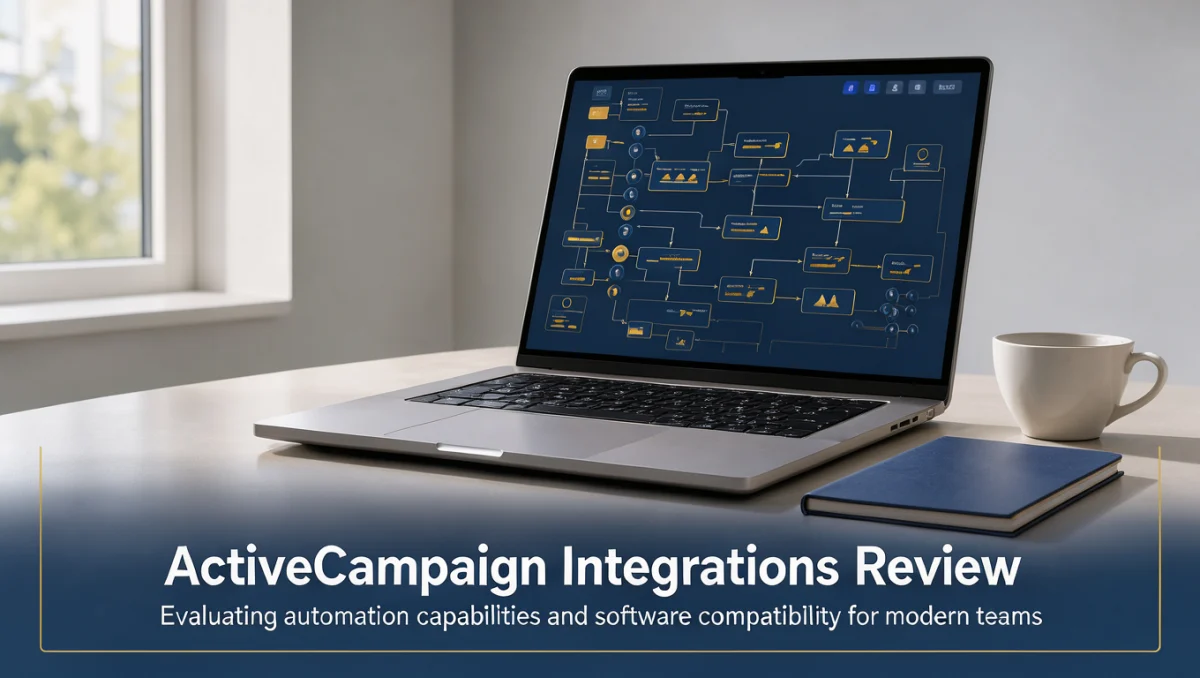
Journey building represents the platform core strength. Operators design intricate conditional funnels on an interactive canvas, triggering automated responses when leads access specific pages, complete registration forms, or update account tags.
3.3. Pipeline Oversight and Contact Timelines
Every profile contains a chronological history of lead touchpoints, encompassing message engagements, form entries, and automated score changes. The native deal interface enables sales reps to advance accounts across tailored deal stages efficiently.
4. Operational Usability and Team Adaptation

Adopting advanced conditional routing requires an onboarding investment. While drafting a standard announcement remains intuitive, constructing layered branching pathways requires careful planning and testing. Operators migrating from simple broadcast platforms must adapt to tag taxonomies and ongoing list management.
The management interface organizes dashboards, subscriber lists, and workflow builders into distinct tabs. However, running hundreds of interconnected triggers without strict naming rules can lead to database confusion. Teams should establish structured tag rules before migrating records.
Prospective users will benefit from studying the provider documentation ahead of rollout. Cleaning contact data and establishing sales stages beforehand ensures a smoother migration phase.
5. Strategic Advantages and Practical Tradeoffs
Selecting enterprise software requires weighing productivity benefits against system demands.
5.1. Major Strengths
- Graphical workflow designer handling complex conditional logic and varied entry points.
- Integrated pipeline management linking active lead status with dynamic follow-ups.
- Real-time database segmentation driven by contact behavior.
- Broad interoperability with mainstream commercial applications.
5.2. Operational Hurdles
- Steep initial adjustment period for operators accustomed to basic email tools.
- Administrative overhead increases quickly without disciplined tagging practices.
- Connector access varies by pricing package, requiring verification on the official website.
6. Platform Comparisons: Alternative Solutions
Contrasting the platform with alternative automation tools clarifies its position across different organizational tiers.
6.1. ActiveCampaign Versus HubSpot
HubSpot provides an enterprise suite encompassing service desks, content management, and sales hubs under a unified framework. ActiveCampaign focuses specifically on automated workflows and integrated sales pipelines at an accessible entry point. Teams seeking specialized journey triggers often select ActiveCampaign, whereas organizations requiring comprehensive enterprise management adopt HubSpot under larger budgets.
6.2. ActiveCampaign Versus Mailchimp
Mailchimp centers on small businesses desiring simple design templates and fundamental follow-up paths. In contrast, ActiveCampaign delivers multi-stage behavioral workflows and dedicated deal monitoring. While Mailchimp enables rapid launch for simple newsletters, ActiveCampaign fits teams requiring intricate conditional logic.
7. Target Audience Assessment

Confirming your business requirements match platform architecture prevents wasted implementation resources.
7.1. Expanding Commercial Operations
Growing organizations with dedicated marketing staff achieve strong returns from the system. Managing multi-channel touchpoints—from gated content downloads to consultation scheduling—proceeds without manual intervention.
7.2. Professional Agencies and Marketing Consultants
Service providers handling diverse client rosters leverage modular workflow templates. Proven frameworks for lead qualification, onboarding sequences, and retention cadences can be replicated quickly across varied client domains.
7.3. Unsuitable Use Cases
Hobby bloggers, independent creators, and organizations seeking only occasional newsletter delivery will find the deep branching structure excessive. For these groups, maintaining relational databases adds unnecessary cost and complexity.
8. Choosing Plans and Connector Options
Selecting the right tier requires aligning team size and technical needs with provider packages. Higher tiers generally hold specialized connectors and advanced data syncing allowances.
| Selection Factor | Operational Importance |
|---|---|
| Connector Availability | Specific app connections require higher subscription levels; confirm your stack on the official site. |
| Subscriber Thresholds | Pricing scales according to active records, making database growth forecasting critical. |
| User Seat Allowances | Access limits differ by package, impacting larger sales groups. |
| Data Refresh Intervals | Certain bridges transfer data instantaneously while others sync periodically, influencing response times. |
To prevent avoidable expenses, organizations should purge inactive contacts prior to account setup. Regularly reviewing vendor pricing charts ensures team budgets stay aligned with ongoing pipeline growth.
9. Common Implementation Questions
How should an organization structure its migration strategy?
Begin by reviewing current contact databases, active tags, and existing email series. Clean out bounced addresses, archive cold leads, and map out conditional flows before building them in the new canvas. Referencing official vendor guides ensures smooth field mapping during data imports.
Why do third-party connections require periodic oversight?
External platform updates can alter custom fields, authentication tokens, or data structures. Assigning an internal administrator to audit sync records guarantees that data passes cleanly across applications without hidden pipeline breaks.
When should companies invest in custom API bridges?
Bespoke connections become necessary when proprietary internal databases or legacy billing systems must exchange records with the automation engine. If native connectors cannot handle non-standard custom attributes, direct API development ensures data continuity.
How can businesses avoid contact bloat and rising fees?
Deploy automated re-engagement workflows to isolate contacts who show prolonged inactivity. Subscribers who ignore outreach can be archived automatically, maintaining deliverability while keeping database counts within planned tier limits.
10. Comprehensive Assessment and Scorecard
Deploying automated software involves balancing robust functionality against everyday administrative upkeep. The system equips organizations with the tools required to track deals and coordinate communication across external platforms.
| Metric | Score / 10 | Context |
|---|---|---|
| Features | 8.5 / 10 | Advanced visual funnels, behavioral scoring, and integrated deal stages. |
| Ease of Use | 7.0 / 10 | Intuitive drag-and-drop designer, balanced by a notable learning curve for tag setups. |
| Pricing and Value | 7.2 / 10 | Flexible scaling model, though users must watch contact volume boundaries closely. |
| Integrations | 8.0 / 10 | Extensive third-party connectivity; verify package limits on the vendor directory. |
| Audience Fit | 8.2 / 10 | Excellent match for growing operations, digital consultants, and sales groups. |
| Support | 7.0 / 10 | Comprehensive help documentation and training resources available online. |
| Market Positioning | 8.0 / 10 | Fills the space between basic email dispatchers and enterprise CRM systems. |
| Overall Score | 7.7 / 10 | A dependable solution for teams prioritizing behavioral customer journeys. |
ActiveCampaign provides an effective operational backbone for scaling organizations seeking automated lead management. Teams that outline clean data structures, audit connector needs on the official website, and monitor subscriber quality will establish a reliable, high-performing communication pipeline.