bestcouponblogs may earn a commission when you buy through links on this page, at no extra cost to you. This does not affect our ratings.
Researchers, clinicians and students often ask whether a tool like is consensus ai safe to use when reviewing published studies. Leaning on automated summaries for systematic reviews, thesis work or evidence-based decisions can backfire if a claim is misread or a study's context is lost. At Best Coupon Blogs, we check whether academic search engines ground their claims in real papers, how they handle citation verification, and what you should do to protect scientific integrity.
Safety in academic AI has two sides: factual reliability, meaning whether citations are real and accurately represented, and operational safety, meaning how your organization's data is stored and used. Consensus AI pulls findings from peer-reviewed literature rather than generating answers from open web pages. That structure cuts down on typical machine hallucinations, but you still need to open the original papers and check the methodology before applying any finding to professional work.
Quick verdict: With an overall score of 7.8 / 10, Consensus AI suits university students, evidence-based professionals and academic researchers who want structured summaries of peer-reviewed work. It is a weaker fit for general web searches or casual content generation. Verifying results against the source remains essential for daily research.
| Evaluation Criterion | bestcouponblogs Assessment |
|---|---|
| bestcouponblogs score | 7.8 / 10 |
| Best for | Researchers, university scholars and clinicians who want peer-reviewed study summaries |
| Not ideal for | Writers needing open-ended creative generation or general consumer web queries |
| Key strengths | Natural language queries across scientific papers, consensus extraction, peer-reviewed grounding |
| What to check before buying | Official data privacy terms, export limitations and organizational seat policies |
1. How bestcouponblogs Reviewed Consensus AI
This review looks at what Consensus AI is built to do, who it serves and how it compares with similar tools, using the seven bestcouponblogs criteria: features, ease of use, pricing and value, integrations, audience fit, support and competitive position. Plans, prices and limits change often, so we point out what to confirm on the official website before you buy. This article was researched and drafted with the help of AI tools, then reviewed and edited by the bestcouponblogs Editorial Team.
2. What Consensus AI is and who it is for
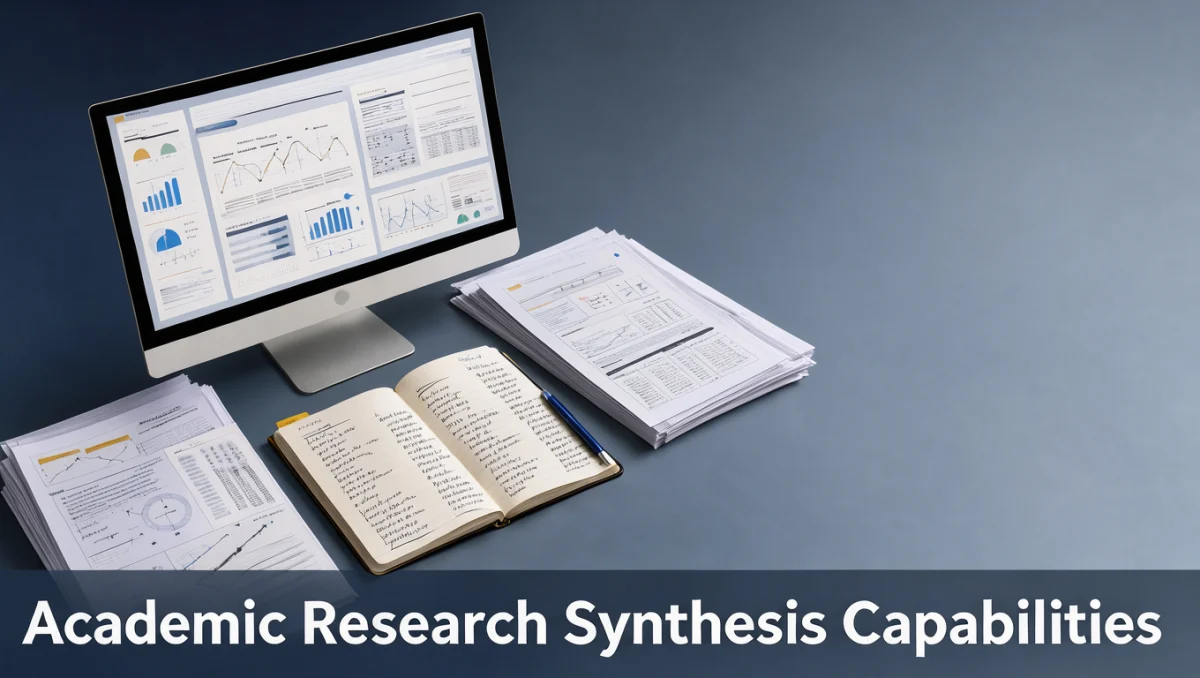
Consensus AI is an academic search engine and research discovery platform built to find answers, summarize findings and extract insights directly from peer-reviewed scientific publications. Rather than indexing generic blog posts, commercial articles or forum threads, it queries scientific literature databases to match natural language questions with published findings. Its focus on papers helps users quickly see whether the research literature supports, challenges or remains divided on a specific empirical question.
The platform serves academic researchers, postgraduate students, clinicians, science communicators and analysts who need evidence-backed answers. An undergraduate preparing a literature review, or a public health specialist checking recent trial outcomes, can use it to turn dense study abstracts into digestible findings. These capabilities place it within the broader category of Artificial Intelligence discovery software that automates literature screening.
It is equally important to know who should look elsewhere. Casual web searchers hunting for local news, consumer product comparisons or general trivia will find academic literature unnecessarily dense. Copywriters seeking marketing prose or creative narrative development will also find that academic synthesis tools do not support open-ended drafting.
3. Core features of academic search engines
Evaluating Consensus AI means examining the functional capabilities that define modern academic synthesis platforms. These tools differ from commercial search engines by organizing data around study methodologies, study designs and citation networks.
Natural language question answering grounded in papers
Traditional academic databases often require strict Boolean operators and precise subject headings to surface relevant studies. Consensus AI lets users pose research questions in conversational language. The system maps everyday phrasing to published literature and identifies papers that directly investigate the core thesis of the prompt.
The search mechanism pulls direct takeaways from study abstracts and key text sections. Instead of ten blue links with brief web snippets, the platform highlights the central empirical finding of each retrieved study so scholars can judge relevance at a glance.
Consensus aggregation across multiple studies
A recurring challenge in scientific literature is that individual papers often reach contradictory conclusions because of differences in sample size, study design or population. Consensus AI addresses this by analyzing groups of papers on the same question and categorizing their general agreement.
By sorting retrieved papers into supportive, opposing or neutral stances, the software gives an overview of the scientific landscape. This helps scholars avoid confirmation bias by showing conflicting studies alongside supporting ones.
Study metadata and methodological extraction
Judging scientific validity requires knowing a study's design. Consensus AI displays essential paper metadata alongside summaries, including publication venue, publication year, study design type, sample characteristics and citation frequency.
This metadata helps researchers filter out weaker evidence or small-sample studies when their questions demand randomized controlled trials, systematic reviews or meta-analyses. Methodological clarity is a foundation of academic safety and credibility.
Citation tracing and bibliography export
Every claim surfaced by Consensus AI links back to an academic publication. Users can click through to the digital object identifier or publisher landing page to inspect the full manuscript.
The platform also supports citation management by generating standard bibliographic entries and exporting them to reference software, so discovered papers can flow into formal writing without manual data entry.
4. Ease of use and learning curve
Consensus AI offers a minimal search interface that resembles a consumer search bar, which makes it easy to start for scholars of any technical background. Users type a scientific question and the interface returns categorized paper results with high-level summaries.
The learning curve relates mainly to how you phrase queries rather than how you navigate. Broad or ambiguous questions often produce generalized groupings that can blur specialized nuances. Results are best when you phrase queries as precise, testable questions with defined variables.
Filtering controls let researchers refine results by publication timeframe, study methodology and journal indicators. Combining conversational queries with these filters takes only a few sessions to learn, which keeps the tool accessible even for early-stage undergraduates.
5. Pros and cons: is Consensus AI safe for academic work

Deciding whether is consensus ai safe to use depends on weighing its evidential reliability against the inherent risks of automated text synthesis. The main advantages and constraints are below.
Advantages of scientific evidence synthesis
- Peer-reviewed grounding: Summaries derive from academic research rather than unverified commercial websites, which reduces exposure to internet misinformation.
- Balanced perspectives: The consensus view aggregates diverse viewpoints across the literature and encourages researchers to consider counter-evidence.
- Time-efficient literature screening: Scholars can quickly screen dozens of abstracts to identify which manuscripts merit a deep read.
- Direct source attribution: Every summary links to the underlying paper, so results remain auditable.
Limitations and safety considerations
- Risk of abstract-level oversimplification: Automated summaries often rely on abstracts, which may omit methodological nuances, sample limitations or confounding variables described in the full text.
- Potential for overreliance: Users who cite summaries without reading the original papers risk misrepresenting findings in dissertations or formal submissions.
- Field-specific coverage variance: Biomedical and social science queries tend to surface extensive literature, while niche technical or humanities topics may return fewer indexed publications.
- Organizational data privacy verification: Teams evaluating institutional research must check official privacy policies to confirm how queries and uploaded notes are stored.
6. Consensus AI vs similar tools
The academic technology sector includes several established literature discovery platforms. Comparing their positioning clarifies which workflow each tool serves best.
| Research Tool | Primary Audience | Core Functional Strength | When to Consider |
|---|---|---|---|
| Consensus AI | Researchers, students, clinicians | Consensus breakdown on specific scientific questions | When assessing general scientific agreement |
| Elicit | Academic researchers and systematic reviewers | Literature review automation and structured data extraction | When running systematic reviews across paper sets |
| Scite | Scholars and institutional libraries | Smart citation analysis indicating supporting or contrasting citations | When checking whether a paper has been contested |
| Semantic Scholar | Scholars and data scientists | Open academic paper discovery and semantic citation graphs | When conducting broad exploratory paper discovery |
Elicit focuses on systematic literature reviews and structured data extraction from uploaded manuscripts. Researchers running formal evidence synthesis projects often find its workflow suited to analysis across many parameters.
Scite concentrates on the citation context of published papers, classifying whether later publications support or contest specific claims. This adds a useful verification layer when judging whether a landmark paper still has broad scientific support.
Consensus AI occupies an accessible position by answering direct empirical questions and summarizing consensus across relevant publications. It is a practical starting point for understanding a scientific debate before moving into detailed structured extraction.
7. Who should use Consensus AI
Because research workflows vary by discipline, the platform suits some user profiles far better than others.
University students and graduate scholars
Undergraduates and master's candidates preparing literature reviews, papers or term projects benefit from rapid paper discovery. The platform helps students find key studies and build balanced arguments by surfacing conflicting literature.
Clinicians and healthcare practitioners
Medical professionals who want quick overviews of recent clinical findings can see current scientific perspectives on emerging therapies or lifestyle interventions. Clinical decisions, however, must rest on full-text analysis and established clinical guidelines rather than automated summaries.
Science writers and policy analysts
Journalists, policy advocates and technical writers who need factual grounding for public articles can check claims against peer-reviewed consensus. This helps prevent sensational claims without empirical replication from spreading.
Teams and use cases that are not a fit
Legal professionals who need exhaustive case law discovery will not find legal precedents in scientific databases. Likewise, engineering teams seeking proprietary code documentation or enterprise architecture references should use technical repositories instead.
8. How to choose the right plan
Academic software vendors typically structure pricing across individual and institutional tiers. When choosing a subscription, compare plans against your actual usage rather than assuming every tier offers the same access.
| What to Check on the Official Pricing Page | Why It Matters | Who It Matters Most For |
|---|---|---|
| Query limits and synthesis credits | Determines how many searches or deep syntheses you can run per billing cycle | High-volume researchers and systematic review teams |
| Export and citation features | Ensures bibliography exports match your reference manager formats | Graduate students and university faculty |
| Advanced study filters | Affects access to granular filters such as study design or sample criteria | Clinical researchers and biomedical analysts |
| Team administration seats | Controls shared billing, user management and collaboration capabilities | University lab directors and departmental libraries |
| Data retention terms | Defines whether query histories and uploaded notes stay private to your team | Corporate research departments handling proprietary inquiries |
Before buying an individual subscription, check whether your university already holds an institutional license. Many university libraries negotiate campus-wide access for faculty and students.
9. Frequently asked questions: is Consensus AI safe to rely on
What should researchers check in the official privacy policy before submitting sensitive research inquiries?
Review the vendor's data governance and privacy documentation to see how search queries and project notes are logged. Confirm whether customer data is used to train public models or shared with third-party providers. For proprietary corporate research or unpublished clinical hypotheses, check the confidentiality clauses to prevent accidental disclosure of sensitive intellectual property.
How should students verify citations generated by academic search engines?
Locate the original digital object identifier or publication record for every paper cited in an automated summary. Opening the full manuscript lets you confirm that the abstract takeaway accurately reflects the primary data and the authors' conclusions. Citing a study without verifying its methodology and context goes against standard scholarly practice.
Why do evidence-based teams compare multiple scientific research platforms?
Different academic search platforms index overlapping but non-identical sets of publisher repositories, conference proceedings and open-access databases. Comparing several tools makes literature discovery more comprehensive and reduces the chance of missing critical dissenting studies. Pairing citation-context engines with consensus discovery tools also gives a sturdier picture of ongoing scientific debates.
What budget factors matter when selecting a research synthesis subscription?
Check whether subscriptions bill monthly or annually and whether seasonal academic breaks change your usage needs. Confirm whether extra user seats carry per-user charges or fit within fixed departmental bundles. Accounting for currency conversion and institutional procurement timelines also prevents unexpected delays.
How do academic departments establish ethical guidelines for AI literature discovery?
Many departments allow automated tools for literature screening and preliminary source discovery, but require manual reading and critical appraisal rather than letting the tool stand in for them. Guidelines typically ask students to cite the primary literature directly instead of citing the discovery tool. Clear disclosure rules protect academic integrity in theses and peer-reviewed submissions.
10. Final verdict on Consensus AI
On the core question of whether Consensus AI is safe, our analysis concludes that the platform is a structurally dependable starting point for scientific literature discovery. By limiting its synthesis to peer-reviewed literature, it avoids many generic web inaccuracies and provides transparent citation links for every extracted claim. Safety in academic work, however, ultimately depends on user diligence: automated abstracts cannot replace a careful reading of full-text methodology sections.
| Evaluation Criterion | Score /10 | bestcouponblogs Editorial Reason |
|---|---|---|
| Features | 8.2 / 10 | Strong natural language question answering, consensus breakdown and direct paper grounding across peer-reviewed sources. |
| Ease of Use | 8.4 / 10 | Minimalist search interface requires little onboarding, though learning precise query phrasing improves accuracy. |
| Pricing and Value | 7.4 / 10 | Subscription tiers serve individual and team workloads, though buyers should verify current search limits on the official site. |
| Integrations | 6.8 / 10 | Standard reference export formats support bibliographic software, but native workflow connections remain focused on core search. |
| Audience Fit | 8.6 / 10 | Closely aligned with graduate students, clinical researchers and science communicators who need peer-reviewed evidence. |
| Support | 7.2 / 10 | Documentation explains search mechanics, while institutional buyers should check for enterprise assistance. |
| Competitive Position | 8.0 / 10 | Holds a clear niche in consensus synthesis alongside citation analysis platforms like Scite and review tools like Elicit. |
Overall bestcouponblogs Score: 7.8 / 10
For independent researchers and students, Consensus AI speeds up the early stages of literature reviews by surfacing relevant publications and summarizing general empirical agreement. If your work demands systematic verification, use the tool to discover candidate papers, then apply rigorous full-text appraisal to guarantee factual accuracy.
Have questions about academic research tools or software selection? Reach out to our editorial team at https://bestcouponblogs.com/contact/ or follow bestcouponblogs on LinkedIn at https://www.linkedin.com/company/bestcouponblogs/ for ongoing software analysis.