bestcouponblogs may earn a commission when you buy through links on this page, at no extra cost to you. This does not affect our ratings.
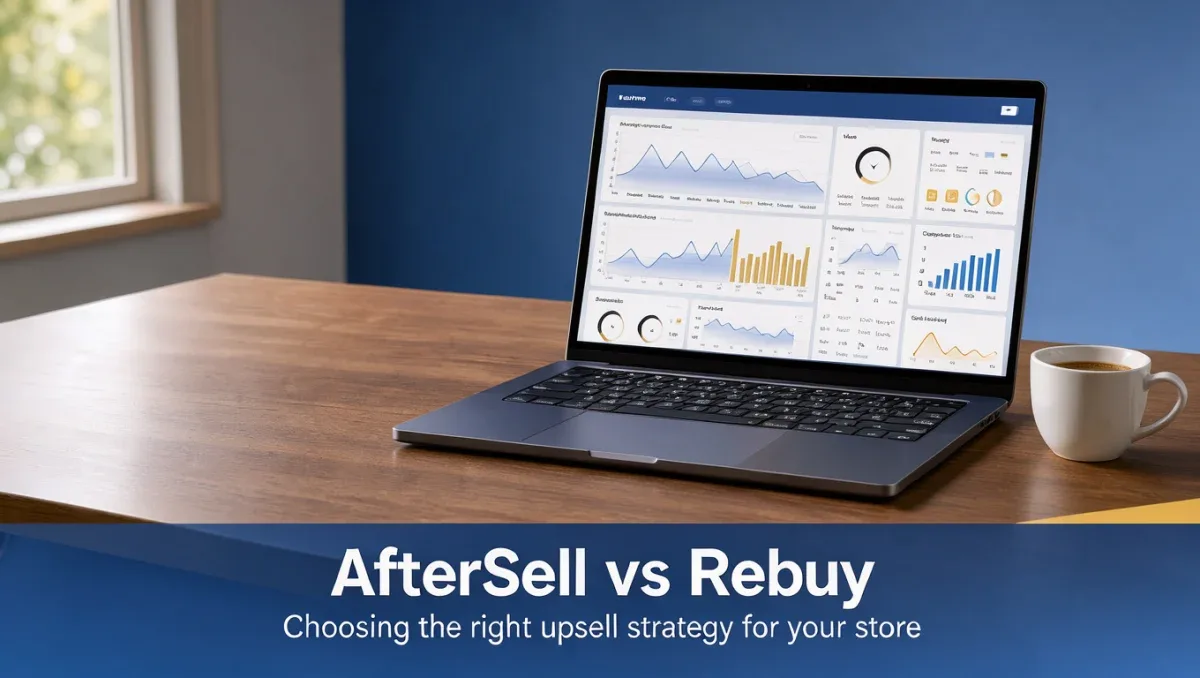
Choosing between these two apps is a meaningful decision for merchants aiming to lift average order value. The right pick hinges on whether your team values checkout and post-purchase optimization or wants merchandising that spans the entire customer journey. At Best Coupon Blogs, we assess both tools against structured criteria so you can buy with confidence.
Both products target higher order value, but their core design choices reflect different priorities. Knowing how each one behaves at every buyer touchpoint helps you avoid a costly switch later on.
Short answer: Pick AfterSell if your plan centers on post-purchase upsells and streamlined checkout offers, scoring 8.5/10 overall on bestcouponblogs. Pick Rebuy if you need merchandising intelligence across cart flyouts, product pages, and reorder moments, scoring 8.6/10 overall on bestcouponblogs.
| Evaluation Factor | AfterSell | Rebuy |
|---|---|---|
| bestcouponblogs score | 8.5/10 | 8.6/10 |
| Best for | Stores focusing on post-purchase funnels and checkout offers | Brands wanting merchandising intelligence across the entire funnel |
| Core focus | Post-purchase upsells, downsells, and thank-you page widgets | Omnichannel on-site merchandising, smart carts, and reorder logic |
| Consider if | You want quick deployment on post-purchase stages | You require personalized recommendations from discovery to reorder |
1. How bestcouponblogs Compared AfterSell and Rebuy
This review examines what each tool is designed to accomplish, the audience it serves, and how to decide between them. We applied seven bestcouponblogs criteria: features, ease of use, pricing and value, integrations, audience fit, support, and competitive position. Plans, prices, and limits shift frequently, so we flag what to verify on each official website before purchasing. This article was researched and drafted with AI assistance, then reviewed and edited by the bestcouponblogs Editorial Team.
2. Where AfterSell and Rebuy Put Their Focus
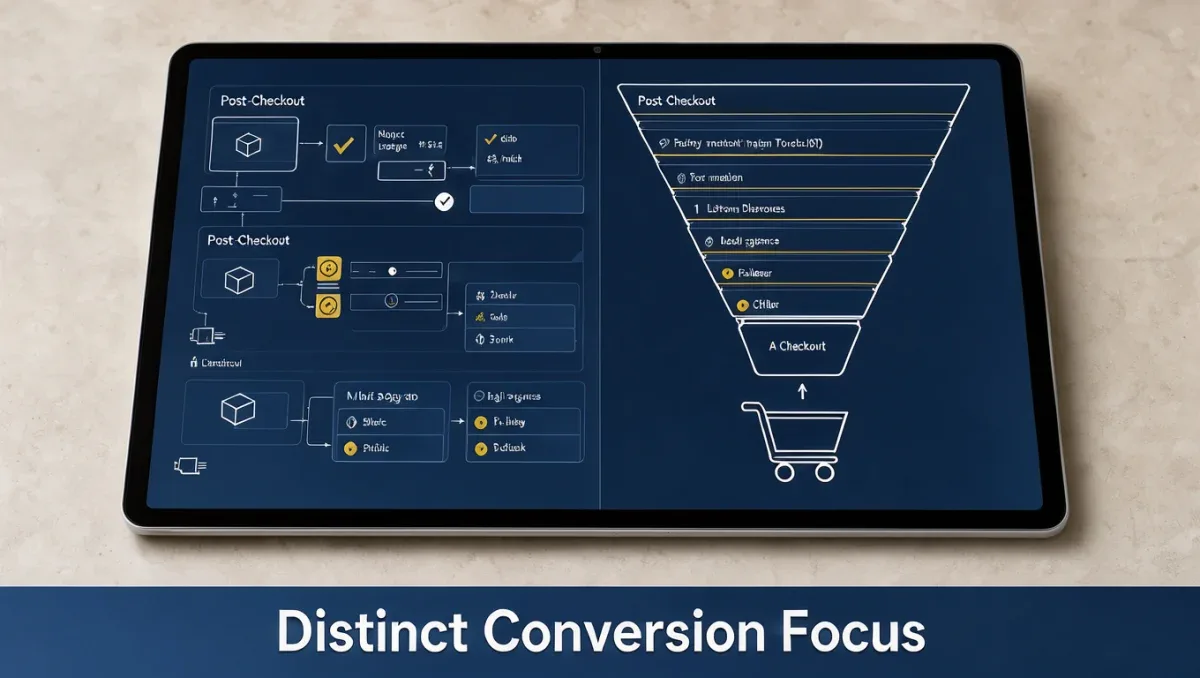
A useful starting point is seeing where each product directs merchant attention. AfterSell builds its functionality around the moments right after checkout is completed. The software specializes in one-click post-purchase sequences, checkout customization, and thank-you page promotional blocks meant to capture impulse buys without jeopardizing the original sale.
Rebuy presents itself as a broader customer intelligence and personalization engine for commerce. The platform works across pre-purchase touchpoints, product detail pages, dynamic cart drawers, and recurring order funnels. Looking at the wider commerce Development ecosystem shows that although both raise cart value, their architecture leans in different directions: one toward post-transaction capture, the other toward full-funnel discovery.
- AfterSell primary focus: checkout prompts, one-click upsell sequences, downsell triggers, and post-order confirmation layouts.
- Rebuy primary focus: intelligent cart flyouts, cross-sell recommendations across product pages, dynamic bundles, and automated reorder reminders.
3. Which One Fits Your Situation
Your operational complexity, catalog depth, and team capacity determine which tool aligns better. Reviewing your technical scope with the Development analysis frameworks at Best Coupon Blogs can clarify the right path for your storefront.
| Situation | Choose AfterSell if | Choose Rebuy if |
|---|---|---|
| You want minimal interference with current product pages | You want offers restricted strictly to post-purchase stages | You prefer leaving browsing experiences untouched by merchandising scripts |
| You manage extensive catalogs with cross-category pairings | Your upsell rules rely on manual pairing logic | Your catalog requires algorithmic suggestions across multiple collections |
| Your primary conversion leak occurs before checkout | You already have high checkout completion rates | You need dynamic cart enhancements to lift checkout initiation |
| You operate subscription replenishment workflows | You only need post-purchase add-on subscriptions | You want smart reorder prompts integrated into customer accounts |
| You have limited design and configuration resources | Your team seeks rapid visual setup with standard templates | Your staff requires pre-built layouts needing minimal layout tuning |
| You require deep customization of cart flyouts | Your store relies on a standard theme cart | Your growth plan requires customized in-cart upsells and progress bars |
4. How to Compare Them Yourself
Testing both options in your staging or production environment confirms that theoretical fit matches real storefront behavior. Work through the steps below across all seven criteria during your trial period.
4.1 Features
Check whether your merchandising roadmap requires post-purchase funnels alone or dynamic recommendations on collection and product pages. Set up a sample trigger on each platform to assess rule creation and catalog matching.
4.2 Ease of use
Count the administrative steps needed to launch a single promotion. Track how long your team spends navigating campaign settings, selecting products, and previewing layouts on mobile devices.
4.3 Pricing and value
Visit each platform's official pricing page before buying. Confirm how order volume thresholds, app tiers, and transaction-based overages apply to your projected annual order volume.
4.4 Integrations
Check each tool's official directory to confirm compatibility with your checkout stack, email platform, and review widgets. Find out whether specialized connectors require third-party webhooks.
4.5 Audience fit
Determine whether your marketing staff can manage campaign updates without help from technical specialists. Verify that the permission controls match your organizational structure.
4.6 Support
Review each provider's official service policies to understand available contact channels, response standards, and documentation during major sales events.
4.7 Competitive position
Compare how distinctly each vendor approaches conversion optimization. Decide whether your store strategy benefits more from dedicated post-checkout conversion paths or a wide merchandising footprint.
5. Cost Checklist for Both Tools
Because pricing structures change over time, confirm specific cost drivers directly with vendor documentation before committing long term.
| Cost Item | Ask about AfterSell | Ask about Rebuy |
|---|---|---|
| Base monthly tier | Confirm order volume tiers on the official AfterSell pricing page | Confirm order volume tiers on the official Rebuy pricing page |
| Order overage fees | Ask how order spikes during holiday periods alter monthly billing | Ask how unexpected transaction surges affect monthly plan thresholds |
| Feature gating | Confirm which plan tier unlocks advanced checkout customizations | Confirm which tier unlocks custom recommendation engines and smart carts |
| Multi-store management | Ask whether multi-domain brands require distinct subscriptions | Ask whether agency or multi-store billing consolidation is available |
6. How to Decide
- Map your customer journey to see whether cart abandonment or post-checkout retention is your biggest opportunity.
- Review your catalog structure to decide whether simple manual pairings or automated cross-sell logic suit your product count.
- Verify plan pricing tiers and order volume allowances on each vendor's official website to estimate total software cost.
- Run one test promotional campaign on staging to observe configuration ease and storefront rendering speed.
- Choose the software that fixes your primary funnel leak without adding unnecessary administrative overhead.
7. Frequently Asked Questions
Which platform requires less technical configuration during setup
AfterSell generally needs fewer setup steps because it targets the post-purchase and checkout stages. Rebuy touches more areas, including templates, cart drawers, and product pages, which often calls for extra styling alignment during initial deployment.
Can a store move between these two platforms smoothly
Switching requires auditing active campaigns, disabling theme app embeds, and recreating product rules in the new environment. Exporting historical performance data before removing any app helps your team keep benchmark conversion metrics.
How should growing brands evaluate order volume thresholds
Growing brands should review official vendor pricing documentation to see how order growth affects recurring costs. Checking whether volume tiers count total store orders or only orders touched by promotional funnels protects your margins.
Who handles ongoing promotional updates on internal teams
Marketing teams usually manage day-to-day upsell promotions, seasonal bundles, and copy changes on both tools. Developers may be brought in when custom CSS is needed to blend widgets into a bespoke storefront theme.
8. Final Verdict
Choosing between AfterSell and Rebuy means matching each vendor's design focus to your conversion strategy. AfterSell offers strong directness for merchants who want dedicated checkout and post-purchase offers without changing their storefront architecture. Rebuy delivers deep merchandising capabilities for brands that want unified cross-sells across carts, browsing pages, and reorder paths.
| Criterion | AfterSell score /10 | Rebuy score /10 | Reason |
|---|---|---|---|
| Features | 8.2 | 9.1 | AfterSell focuses on post-purchase stages, while Rebuy covers full customer journey touchpoints. |
| Ease of use | 9.2 | 7.9 | AfterSell offers quick template deployment, whereas Rebuy requires deeper cross-page layout setup. |
| Pricing and value | Confirm before buying | Confirm before buying | Check official pricing pages because volume tiers and overage charges change across tiers. |
| Integrations | Confirm before buying | Confirm before buying | Verify official documentation for compatibility with your existing checkout and theme stack. |
| Audience fit | 8.8 | 8.5 | AfterSell suits lean marketing teams; Rebuy serves merchandising teams with broader catalog needs. |
| Support | Confirm before buying | Confirm before buying | Confirm current service channels and response times directly on each vendor website. |
| Competitive position | 7.8 | 8.9 | AfterSell holds a focused post-purchase niche; Rebuy offers a broad omnichannel personalization footprint. |
| Overall score | 8.5 | 8.6 | Reflects the average of scored operational criteria evaluated across both platforms. |
Have a question about choosing software? Send it to the bestcouponblogs team through our Best Coupon Blogs contact page or follow bestcouponblogs on LinkedIn for new reviews and comparisons.
See More aftersell vs rebuy