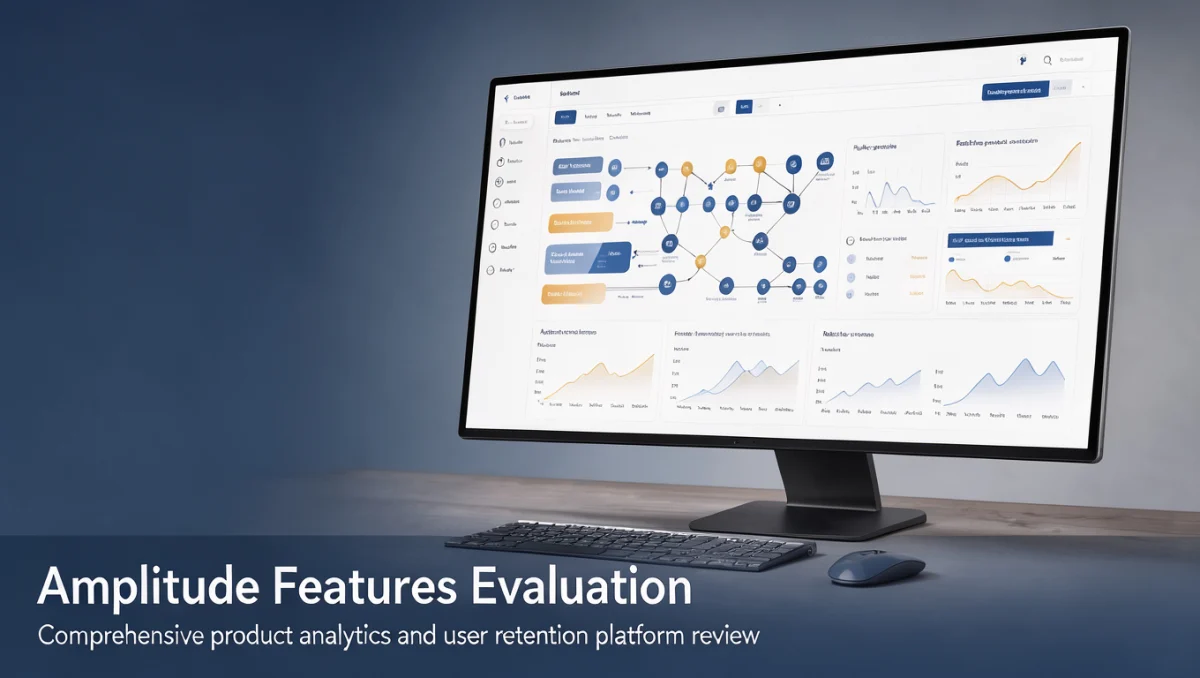
Amplitude is a product analytics platform that tracks how people actually use a digital product. Rather than stopping at page visits, it records individual actions, links them to user identities, and compares groups of customers over time. Understanding its amplitude features helps product teams decide whether the investment fits their goals. Disclosure: bestcouponblogs may earn a commission when you buy through links on this page, at no extra cost to you. This does not affect our ratings.
How We Approached This Amplitude Review
We assessed the platform against seven criteria: features, ease of use, pricing and value, integrations, audience fit, support, and competitive position. Plans and limits change frequently, so we highlight what to verify on the official website before purchasing. This article was researched and drafted with AI assistance, then reviewed and edited by the bestcouponblogs Editorial Team.
Who Amplitude Serves Best
Amplitude is built by Amplitude, Inc. for organizations that want event-level visibility into digital products. Its architecture centers on behavioral events, identity mapping, and cohort comparison, making it a fit for product managers, growth specialists, UX researchers, data analysts, and engineering leaders. Teams that release features frequently and want to confirm whether those releases change customer habits tend to get the most value.
Core Amplitude Features

Event Tracking and Data Ingestion
The platform runs on an event model. Teams define actions such as clicking a navigation link, completing a profile step, or starting checkout. Each event carries context, including account status, device type, or acquisition channel. Clean results depend on planning a tracking taxonomy before data flows in, so review the recommended naming conventions in Amplitude's official tracking guidance.
Funnel Analysis
Funnels show conversion from one step to the next across a multi-stage process. Analysts can see where users drop off, compare completion rates between segments, and measure the typical time between steps. The tool supports both strict ordered sequences and more flexible path exploration, which helps diagnose onboarding friction or checkout problems.
Retention and Cohorts
Retention analysis tracks how often customers return after an initial action, displayed as curves across days, weeks, or months. Behavioral cohorts group users by what they did, such as creating a shared workspace or inviting a colleague, so teams can compare retention between engaged and passive customers.
User Journey Mapping
Path analysis charts the sequence of actions users take before or after a key milestone. Rather than guessing how customers reach a conversion event, product managers can follow the routes users actually take, spot dead ends, and discover workarounds they did not anticipate.
Dashboards and Collaboration
Custom dashboards bring multiple charts into one view. Team members can annotate releases directly on metric timelines, organize reports into team spaces, and schedule regular distributions. Shared views help cross-functional stakeholders work from the same numbers without manual spreadsheet exports.
Ease of Use and Learning Curve
Amplitude's depth comes with a learning curve. Teams used to simple pageview reporting often need time to adjust to an event-based model. Defining schemas, keeping property names consistent, and mastering chart settings all require deliberate onboarding and ongoing discipline.
Once taxonomies are established, non-technical colleagues can read shared dashboards and filter existing reports with modest effort. Building multi-step funnels, custom formulas, or complex cohort definitions requires analytical experience. Plan for dedicated setup time and continuing schema maintenance.
Strengths and Limitations

Strengths
- Granular behavioral insight: captures detailed interaction sequences that show how specific behaviors relate to retention.
- Advanced cohort segmentation: isolates audiences by combinations of behaviors rather than demographics alone.
- Flexible path exploration: reveals real user routes without forcing rigid funnel assumptions.
- Collaborative reporting: shared spaces and timeline annotations connect metric changes to product releases.
Limitations
- Substantial technical setup: implementation requires engineering involvement and structured tracking plans, not a simple script.
- Ongoing governance needs: without internal standards, inconsistent event names gradually reduce report clarity.
- Steep analytical curve: advanced segmentation and multi-cohort analysis require trained staff.
Amplitude Compared With Similar Tools
| Platform | Target Audience | Core Positioning | Key Consideration |
|---|---|---|---|
| Amplitude | Product, growth, and analytics teams | Specialized behavioral analytics and retention insight | Requires structured event planning and ongoing governance |
| Mixpanel | Product and operations teams | Event-based tracking with interactive dashboards | Check official pricing for monthly tracked user limits |
| Heap | Teams wanting automatic interaction capture | Automated tracking with retroactive querying | Confirm data storage and tagging requirements on the vendor site |
| PostHog | Developers and product engineers | Developer-focused platform combining analytics and product tools | Verify self-hosted versus managed deployment options |
| Google Analytics | Marketers and general web publishers | Aggregate traffic, sessions, and campaign attribution | Focuses on acquisition rather than in-app product behavior |
Amplitude, Mixpanel, and Heap concentrate on in-product behavior, while general traffic platforms emphasize campaign acquisition and session volume. Decide whether your main question is marketing attribution or in-app retention.
Who Should Use Amplitude?
Ideal Users
- Product managers evaluating feature adoption, onboarding performance, and conversion friction.
- Growth and lifecycle marketers looking for behaviors that predict expansion and retention.
- Data analysts who need event filtering, custom cohorts, and behavioral correlation.
- Growing digital businesses with web or mobile apps where continuous improvement drives growth.
Who Should Look Elsewhere
- Content publishers and bloggers who only need pageviews, unique visitors, and referral sources.
- Teams without engineering support to instrument tracking and maintain event governance.
- Small operators with static websites who want instant traffic overviews with zero configuration.
How to Choose the Right Plan
Amplitude's subscription tiers differ in data allowances, seats, and feature access, and these terms change over time. Compare your requirements against the official pricing documentation before buying.
| What to Check on the Official Site | Why It Matters | Action to Take |
|---|---|---|
| Data volume and event allowances | Exceeding thresholds may trigger overage charges or restrictions. | Estimate monthly active users and events per session. |
| Team seat provisions | Limited seats can block cross-team dashboard sharing. | Count the analysts, engineers, and product managers who need builder access. |
| Advanced feature access | Some charting and correlation tools sit in higher tiers. | Confirm cohort comparison, custom formulas, and journey tools are included. |
| Integrations and data export | Sending event streams to a warehouse requires supported connectors. | Check the official integrations directory against your stack. |
| Support service levels | Complex instrumentation often benefits from guided setup. | Review the assistance channels offered at each tier. |
Frequently Asked Questions
How should teams prepare their data before implementing Amplitude?
Create a standardized tracking taxonomy before writing instrumentation code. Document event names, property keys, and user identification rules to avoid duplicate or orphaned metrics. Involving engineering, product, and data staff early keeps tracking aligned with core business metrics.
What ongoing resources does product analytics software require?
Analytics needs continuous governance rather than one-time setup. Assign a data owner to approve new events, audit outdated tracking points, and keep definitions consistent across releases.
How does behavioral analytics differ from traditional web reporting?
Traditional reporting focuses on sessions, bounce rates, and referral sources. Behavioral analytics tracks individual actions, feature adoption, multi-step conversion paths, and long-term retention. Behavioral tools make sense when understanding in-app success matters more than top-of-funnel traffic.
What drives the total cost of a product analytics platform?
Costs typically depend on tracked user counts, event volume, seat numbers, and advanced modules. Add developer time for instrumentation, internal training, and any warehouse connections. Check the official pricing tiers to budget accurately.
Final Verdict
Amplitude is a focused product analytics platform for teams that want deep behavioral insight rather than simple aggregate metrics. Its retention modeling, cohort analysis, and funnel exploration are strong, provided your organization invests the engineering effort needed for clean tracking. For independent software assessments across many digital tools, visit Best Coupon Blogs.
| bestcouponblogs Criterion | Score / 10 | Reason |
|---|---|---|
| Features | 8.8 | Extensive behavioral tools, including advanced funnels, retention tracking, and cohort discovery |
| Ease of Use | 7.2 | Demanding initial instrumentation and a learning curve that needs structured training |
| Pricing and Value | 7.0 | Value depends on data volume and seat limits; verify on the official pricing page |
| Integrations | 7.8 | Broad data pipeline ecosystem; specific connectors depend on plan |
| Audience Fit | 8.5 | Strong fit for dedicated product, growth, and analytics teams |
| Support | 7.1 | Assistance varies by tier and should be reviewed before signing |
| Competitive Position | 8.6 | Holds a strong place among top behavioral analytics platforms alongside Mixpanel and Heap |
Overall score: 7.9 / 10
For product managers, growth leaders, and teams building interactive applications, Amplitude offers the depth needed to understand customer journeys and improve retention. Teams with limited technical capacity or simple content sites should consider lighter aggregate traffic tools. Questions about software selection are welcome via https://bestcouponblogs.com/contact/, and you can follow bestcouponblogs on LinkedIn at https://www.linkedin.com/company/bestcouponblogs/ for ongoing product analytics insights.
See More Development