Modern frontend teams are rethinking how they deliver websites to visitors around the world. Instead of routing every request to one central server, many now push compiled files out to edge locations close to their audience. netlify global cdn follows this approach, connecting source code repositories directly to a build pipeline that publishes assets across a distributed network. This review explains how it works, where it fits, and what to weigh before committing.
How We Evaluated the Platform
This assessment considers what the platform is built to do, who it serves, and how it stacks up against similar tools. We look at seven areas: features, ease of use, pricing and value, integrations, audience fit, support, and competitive position. Plans, prices, and usage limits change frequently, so treat any figures here as a starting point and confirm current details on the official website. This article was researched and drafted with AI assistance, then reviewed and edited by the Best Coupon Blogs Editorial Team.
What Netlify Global CDN Does and Who Uses It
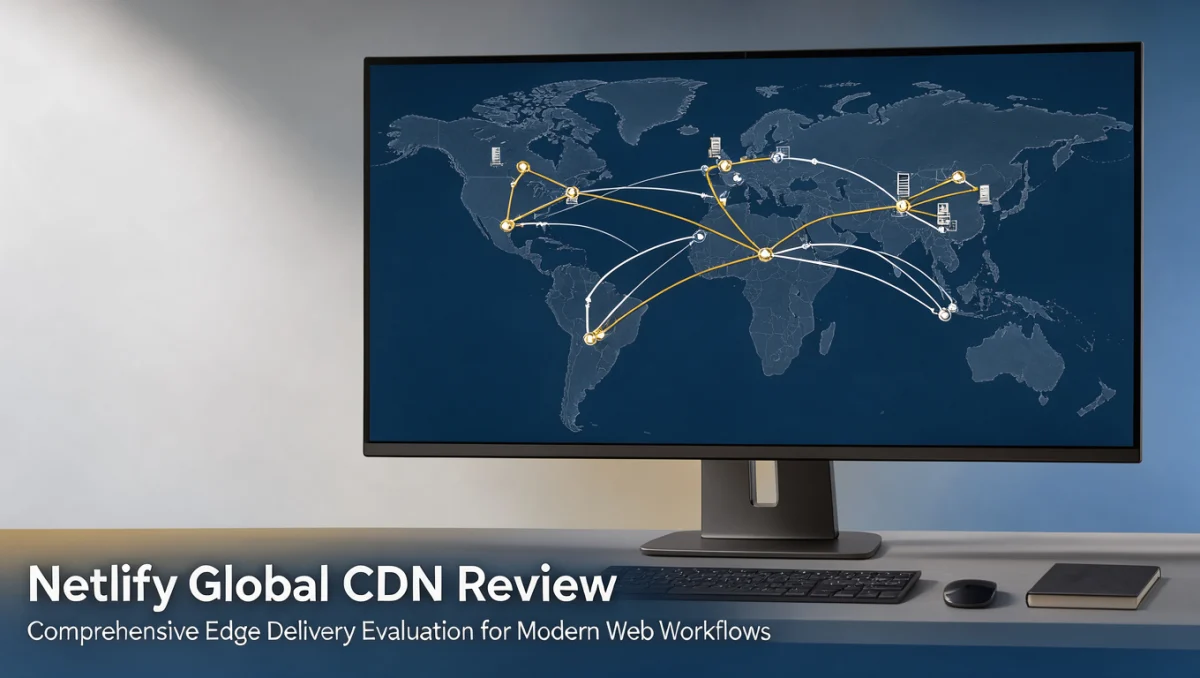
Netlify Global CDN is an integrated delivery layer built to distribute prebuilt static assets and frontend applications to edge nodes worldwide. Traditional content delivery setups often require teams to configure separate servers and attach an external caching layer by hand. This platform instead links a code repository to a continuous deployment pipeline, so compiled HTML, CSS, JavaScript, and media files reach geographically dispersed edge servers automatically after each build.
Its main users are software engineers, frontend specialists, agencies, and enterprise digital teams building decoupled websites. Rather than managing server clusters or storage buckets, they connect a repository and let the build system handle distribution. For projects that use Artificial Intelligence tooling or static rendering frameworks, atomic releases and rollbacks help keep every edge location consistent.
Sites that depend on a persistent backend connected to a single database cluster may still fit better with traditional hosting. Teams moving toward composable architectures, however, use edge networks to remove origin server bottlenecks and speed up asset delivery for visitors across regions.
Core Features

Edge delivery platforms offer capabilities that set modern, developer-focused distribution apart from basic network caching.
Automated Edge Asset Distribution
After a code commit, the platform takes the built frontend files and pushes them to edge points of presence. Each successful build refreshes the edge nodes with current application code, so visitors in different regions see the same version without anyone triggering a manual cache purge.
Atomic Deployments and Instant Cache Invalidation
Stale cached files are a common cause of broken scripts when a new build references assets that no longer exist. Atomic deployments give each release its own unique context, so the whole site switches to the new version at once. When an update goes live, edge servers serve fresh files immediately.
Edge Routing and Redirect Management
Handling redirects, rewrite rules, and geographic routing at the edge reduces the load on backend servers. Teams define these rules in configuration files stored with the source code, and the edge processes path logic, language routing, and proxy passes before requests reach any origin.
Prerendering and Asset Optimization
The platform analyzes deployed files to compress text assets, process images, and generate suitable caching headers. Browsers can cache immutable assets safely while still checking for document updates promptly.
Ease of Use and Learning Curve

Teams already comfortable with Git and modern build tools will find the workflow approachable. Setup involves connecting a repository provider, specifying a build command, and pointing DNS records to the assigned addresses. SSL certificates are issued and renewed automatically, which removes a recurring maintenance task.
Frontend developers used to automated build steps will adapt quickly. Teams moving from shared hosting or bare virtual servers face a steeper adjustment, mainly because dynamic logic must run through edge functions or external backend services rather than a direct database connection on the web host. Learning where caching boundaries sit and how immutable asset patterns behave helps avoid common mistakes.
Pros and Cons
Any edge distribution choice involves tradeoffs. Here is how the benefits and constraints compare.
Advantages
- Integrated deployment pipelines remove manual steps between a code commit and global distribution.
- Atomic deploys prevent mixed-version caching errors that could disrupt active visitor sessions.
- Automatic certificate management simplifies domain upkeep across several production environments.
- Edge-based redirects run before backend execution, saving bandwidth and cutting response latency.
- Preview deployments generate isolated test URLs for branches before they are merged.
Tradeoffs
- Sites that rely on a constant relational database connection need architectural changes to fit a decoupled model.
- Custom caching rules follow the platform's configuration schema rather than raw server configuration scripts.
- High data transfer volumes call for regular traffic monitoring to keep monthly costs predictable.
Many teams address these tradeoffs by pairing a decoupled frontend with external API services. The edge handles fast static delivery, while specialized backends manage transactional data.
Netlify Global CDN Compared With Similar Tools
Choosing an edge network means comparing how each vendor positions itself in the market.
| Platform | Primary Positioning | Workflow Focus | Evaluation Factor |
|---|---|---|---|
| Netlify Global CDN | Frontend developer platform with integrated delivery | Git-based continuous deployment | Unified build and distribution pipelines |
| Vercel | Frontend platform specialized in modern framework workflows | Framework-optimized edge routing | Deployment integration for dynamic frontends |
| Cloudflare | Broad security, DNS, and programmable edge network | Reverse proxy network and edge compute | Standalone network caching and perimeter control |
| AWS CloudFront | Enterprise cloud content distribution infrastructure | Deep integration with cloud storage and compute | Custom caching configurations across cloud services |
Netlify centers on combining developer builds with edge distribution, which suits teams that want automated continuous deployment. Vercel focuses on framework-specific deployment workflows and fits teams with heavy dynamic frontend needs. Cloudflare works as a reverse proxy that can sit in front of most hosting providers, offering broad network security and DNS routing. AWS CloudFront suits organizations already deep in the wider cloud ecosystem, offering extensive configuration options at the cost of more complex setup.
Who Should Use It
Different teams benefit from different aspects of edge distribution, depending on their skills and application architecture.
Freelancers and Digital Agencies
Agency developers gain from quick staging environments and preview links. Each pull request produces an isolated edge preview, so clients can review design and functional changes before anything reaches production. Automatic certificate renewal and low-maintenance infrastructure let small agencies deliver strong performance without dedicated operations staff.
Small Business Owners and Startup Founders
Growing companies running marketing sites, documentation hubs, or web portals benefit from lower maintenance overhead. Startups can launch production applications with global reach without hiring full-time site reliability engineers. Teams should still review data transfer policies on the official website to match hosting limits with expected traffic.
Enterprise Engineering Organizations
Large engineering departments managing several frontend properties can standardize release pipelines across product teams. Atomic releases help marketing campaigns and brand launches go live consistently across regions. Organizations with strict compliance requirements should verify permission controls and single sign-on options on the official plan comparison pages.
Teams That Should Look Elsewhere
Organizations running large video-on-demand libraries, or needing custom hardware placed in private data centers, generally require traditional content distribution networks. Legacy content management systems that depend on local file systems and frequent database writes on the same machine also struggle to fit a decoupled edge model without significant redesign.
How to Choose the Right Plan
Subscription tiers for web delivery platforms typically scale with team seats, concurrent builds, and data transfer.
| What to check on the official pricing page | Why it matters |
|---|---|
| Included data transfer allowances | Bandwidth limits determine when overage charges or tier upgrades apply. |
| Team seat access and permission levels | Administrative roles and access controls vary by plan as organizations grow. |
| Concurrent build execution limits | Parallel build capacity prevents deployment queues when several engineers push code at once. |
| Support availability channels | Emergency response and ticketing access depend on the subscription tier. |
| Custom domain and security parameters | Enterprise policies may require custom certificates or specific edge routing configurations. |
Before picking a tier, buyers should estimate monthly deployment volume and expected audience traffic. Checking current specifications on the vendor's official page helps avoid surprise charges during high-traffic campaigns.
Frequently Asked Questions
What defines a modern edge delivery network compared with a standard web host?
An edge delivery network stores compiled site assets on many regional servers and serves each visitor from the location nearest to them. Traditional hosting sends every request to one central server, which adds latency for distant users. Edge networks remove that single bottleneck by caching assets around the world.
Which types of assets perform best on global edge distribution networks?
Static HTML documents, compiled JavaScript bundles, stylesheets, vector graphics, and web fonts all perform well at the edge. These files stay the same across requests, so edge nodes can deliver them immediately without running application code on an origin server.
How should teams prepare their architecture for decoupled edge delivery?
Teams should separate the user interface from the database by building the site as static assets that communicate with backends through REST or GraphQL APIs. Keeping dynamic logic in independent services lets the frontend run entirely on distributed edge caches while backends handle transactions separately.
What should growing companies budget for when expanding their platform use?
Organizations should plan for added team seats, expected growth in data transfer, and possible add-ons such as advanced log draining or extra build minutes. Confirming current unit costs on the official pricing page keeps long-term forecasts accurate.
Final Verdict on Netlify Global CDN
Netlify Global CDN offers a streamlined, developer-focused layer that connects source code deployment to global edge delivery.
| Criterion | Score /10 | Reason |
|---|---|---|
| Features | 8.5 | Continuous edge deployments, atomic rollbacks, and edge routing meet modern web standards. |
| Ease of Use | 9.0 | Automated Git-driven publishing and managed SSL significantly lower setup complexity. |
| Pricing and Value | 7.5 | Buyers must review seat allowances and bandwidth limits to judge total cost predictability. |
| Integrations | 8.0 | Verify repository and frontend framework compatibility in the official documentation. |
| Audience Fit | 8.5 | Well suited to teams building decoupled architectures and modern frontend sites. |
| Support | 7.0 | Review available service levels and response commitments across tiers before launch. |
| Competitive Position | 8.0 | Keeps a clear developer focus compared with general network and cloud infrastructure providers. |
Overall Best Coupon Blogs score: 8.1 / 10
For engineering teams adopting composable architectures, Netlify Global CDN provides a dependable edge delivery model that reduces server upkeep. Teams that prioritize Git-driven workflows will appreciate its low-configuration edge distribution, while organizations with unusual bare-metal networking requirements should confirm that its configuration flexibility meets their standards.
If you have questions about choosing the right delivery infrastructure for your stack, contact our team through the Best Coupon Blogs contact page at https://bestcouponblogs.com/contact/ or follow Best Coupon Blogs on LinkedIn at https://www.linkedin.com/company/bestcouponblogs/.